














Gayther
LGBTQIA+ Pioneers
Exceptional individuals that contributed to the LGBTQIA+ global movement
2027

The Gay, Lesbian, Bisexual, Transgender and all those with non-traditional gender or sexual identities have been targeted and persecuted for thousands of years because of who they love or how they identify.
Over the centuries, many brave and exceptional individuals, often at significant personal risk, went against the odds and refused to let inequalities and prejudices stop them from changing the rules, laws and opinions relating to the LGBTQIA+ community across the globe.
We must all remember and celebrate those exceptional individuals. Those people that are now and in the past who have fought hard for equal treatment for the LGBTQIA+ community
Over the centuries, many brave and exceptional individuals, often at significant personal risk, went against the odds and refused to let inequalities and prejudices stop them from changing the rules, laws and opinions relating to the LGBTQIA+ community across the globe.
We must all remember and celebrate those exceptional individuals. Those people that are now and in the past who have fought hard for equal treatment for the LGBTQIA+ community
CONTENTS
WILLEM ARONDEUS
VIRGINIA WOOLF
OCIEL BAENA
ADOLF BRAND
AXEL AND EIGIL AXGIL
ABOUT LGBTQIA+ PIONEERS
MORE
SHARE
PIONEERS COLLECTION
Each year, we create LGBTQIA+ dollars and feature key individuals in the LGBTQIA+ community. Though some of the individuals featured may not have publicly identified as LGBTQIA+, they are exceptional people who have advanced the community or world in some way.
Alternatively, why not discover other amazing advocates and pioneers in previous year collections
REACH OUT FOR HELP
If you or someone you know suffers from depression, please reach out. Many trained and amazing groups and organisations can help you with whatever you face. To help you find what you need quickly, we have created the Gayther Support Directory. The directory is designed to help you quickly find organisations, groups, and helplines near you. Click here to access the directory or to learn more.
LGBTQIA+ Pioneers
2027
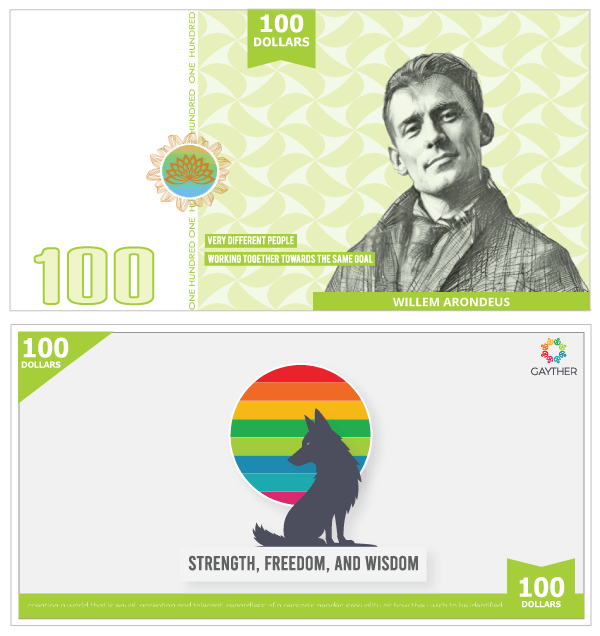
Dutch Artist and Author
Naarden, Netherlands
b. 1894 - d. 1943
Naarden, Netherlands
b. 1894 - d. 1943
Willem Arondéus was a Dutch artist and openly gay man who defiantly opposed the Nazi regime and its persecution of the Jewish community in Amsterdam during the Second World War. As part of the resistance, he used his artistic skills to forge identity documents for Jewish people and fellow resistance fighters, helping them reach safety. On 27 March 1943, Willem, along with fellow resistance members, attacked the Amsterdam population registry, destroying thousands of identity records to prevent the Nazi regime from identifying and persecuting Jewish people and others who were being targeted.
Willem Johan Cornelis Arondéus was born on 22 August 1894 in the Dutch city of Naarden, in the province of North Holland, Netherlands. He was the youngest son of Hendrik Cornelis Arondéus and Catharina Wilhelmina de Vries. From a young age, Willem had a love of the arts and chose to pursue them, training as a decorative painter at the Quellinus School of Applied Arts in Amsterdam. He later worked as an illustrator, poster designer, tapestry designer and painter. In 1923, he was commissioned to paint a large mural for Rotterdam City Hall.
Willem was openly gay at a time when homosexuality was still heavily stigmatised in the Netherlands. From a young age, he was aware of his sexuality, and when he finally acknowledged it, it led to a serious conflict with his father, forcing him to leave the family home. Despite the difficulties he faced, Willem refused to hide his identity. His sexuality would remain an important part of his life and, ultimately, his legacy.
Although Willem had been writing for many years, he began to focus on becoming an author around 1935. Although the poems and stories he had written in the 1920s had not been published, in 1938 two of his novels, Het Uilenhuis (The Owl House) and In de bloeiende Ramenas (In the Blossoming Winter Radish), both of which he also illustrated, were published. The following year, in 1939, he published Matthijs Maris: de tragiek van den droom (The Tragedy of the Dream), a biography of the painter Matthijs Maris.
Like many people in the late 1930s, Willem’s life changed dramatically with the outbreak of the Second World War. In May 1940, Nazi Germany invaded and occupied the Netherlands, including the city of Amsterdam, where he lived, beginning an occupation that would last until 1945. Willem opposed the Nazi regime and became involved in the Dutch resistance. In 1942, he began an underground publication, Brandarisbrief, which encouraged fellow artists to resist the Nazi authorities. Through his resistance work, Willem helped produce forged identity documents to help Jewish people and other members of the resistance evade the Nazi authorities.
The forged documents could be cross-checked against the official records maintained by Amsterdam’s population registry, enabling the Nazis to identify forgeries quickly. Willem and fellow resistance leader Gerrit van der Veen therefore helped develop a plan to destroy the registry itself. On 27 March 1943, Willem and his fellow resistance fighters attacked the Amsterdam population registry. Disguised as police officers, they entered the building and set it alight. The attack was successful, destroying approximately 800,000 identity cards, about 15% of the records, making it much more difficult for the Nazi authorities to verify forged identities.
The attack was a major victory, and although nobody was arrested that night, the resistance group was eventually betrayed. Willem was arrested on 1 April 1943. Despite being captured, he refused to betray the other members of his team. However, a notebook found among his personal belongings contained information that helped the authorities identify and arrest other members of the resistance group.
Willem was tried on 18 June 1943 and sentenced to death. He was executed by firing squad on 1 July 1943, alongside other members of the resistance. Before his execution, Willem wanted it known that he and two other men in the resistance group were gay. He asked that a message be passed to the public, “Zeg de mensen dat homoseksuelen niet per definitie zwakkelingen zijn” or “Tell people that homosexuals are not cowards.”
It takes great bravery to stand against a regime that dominated much of Europe, particularly when you know that doing so could ultimately cost you your life. But Willem’s courage went even further. He refused to hide who he was, even at a time when being openly gay could bring rejection, discrimination and danger. Willem risked his life, and ultimately lost it, fighting against Nazi persecution and protecting people who were being targeted because of who they were.
Willem Arondéus may have died in 1943, but his bravery and legacy endure. His story is an important part of Dutch and LGBTQIA+ history, and he deserves to be remembered. His final words were a defiant reminder that being gay does not make someone weak and that courage is not defined by whom we love. Willem, may you never be forgotten.
Willem Johan Cornelis Arondéus was born on 22 August 1894 in the Dutch city of Naarden, in the province of North Holland, Netherlands. He was the youngest son of Hendrik Cornelis Arondéus and Catharina Wilhelmina de Vries. From a young age, Willem had a love of the arts and chose to pursue them, training as a decorative painter at the Quellinus School of Applied Arts in Amsterdam. He later worked as an illustrator, poster designer, tapestry designer and painter. In 1923, he was commissioned to paint a large mural for Rotterdam City Hall.
Willem was openly gay at a time when homosexuality was still heavily stigmatised in the Netherlands. From a young age, he was aware of his sexuality, and when he finally acknowledged it, it led to a serious conflict with his father, forcing him to leave the family home. Despite the difficulties he faced, Willem refused to hide his identity. His sexuality would remain an important part of his life and, ultimately, his legacy.
Although Willem had been writing for many years, he began to focus on becoming an author around 1935. Although the poems and stories he had written in the 1920s had not been published, in 1938 two of his novels, Het Uilenhuis (The Owl House) and In de bloeiende Ramenas (In the Blossoming Winter Radish), both of which he also illustrated, were published. The following year, in 1939, he published Matthijs Maris: de tragiek van den droom (The Tragedy of the Dream), a biography of the painter Matthijs Maris.
Like many people in the late 1930s, Willem’s life changed dramatically with the outbreak of the Second World War. In May 1940, Nazi Germany invaded and occupied the Netherlands, including the city of Amsterdam, where he lived, beginning an occupation that would last until 1945. Willem opposed the Nazi regime and became involved in the Dutch resistance. In 1942, he began an underground publication, Brandarisbrief, which encouraged fellow artists to resist the Nazi authorities. Through his resistance work, Willem helped produce forged identity documents to help Jewish people and other members of the resistance evade the Nazi authorities.
The forged documents could be cross-checked against the official records maintained by Amsterdam’s population registry, enabling the Nazis to identify forgeries quickly. Willem and fellow resistance leader Gerrit van der Veen therefore helped develop a plan to destroy the registry itself. On 27 March 1943, Willem and his fellow resistance fighters attacked the Amsterdam population registry. Disguised as police officers, they entered the building and set it alight. The attack was successful, destroying approximately 800,000 identity cards, about 15% of the records, making it much more difficult for the Nazi authorities to verify forged identities.
The attack was a major victory, and although nobody was arrested that night, the resistance group was eventually betrayed. Willem was arrested on 1 April 1943. Despite being captured, he refused to betray the other members of his team. However, a notebook found among his personal belongings contained information that helped the authorities identify and arrest other members of the resistance group.
Willem was tried on 18 June 1943 and sentenced to death. He was executed by firing squad on 1 July 1943, alongside other members of the resistance. Before his execution, Willem wanted it known that he and two other men in the resistance group were gay. He asked that a message be passed to the public, “Zeg de mensen dat homoseksuelen niet per definitie zwakkelingen zijn” or “Tell people that homosexuals are not cowards.”
It takes great bravery to stand against a regime that dominated much of Europe, particularly when you know that doing so could ultimately cost you your life. But Willem’s courage went even further. He refused to hide who he was, even at a time when being openly gay could bring rejection, discrimination and danger. Willem risked his life, and ultimately lost it, fighting against Nazi persecution and protecting people who were being targeted because of who they were.
Willem Arondéus may have died in 1943, but his bravery and legacy endure. His story is an important part of Dutch and LGBTQIA+ history, and he deserves to be remembered. His final words were a defiant reminder that being gay does not make someone weak and that courage is not defined by whom we love. Willem, may you never be forgotten.

Exceptional and diverse
Discover more about the diverse and extraordinary global LGBTQIA+ community. Find interesting facts, enjoy engaging interactive games, learn about pioneering advocates, and take pride in all sexualities, gender identities, and special groups. Explore everything LGBTQIA+ with Gayther today.
LGBTQIA+ Pioneers
2027
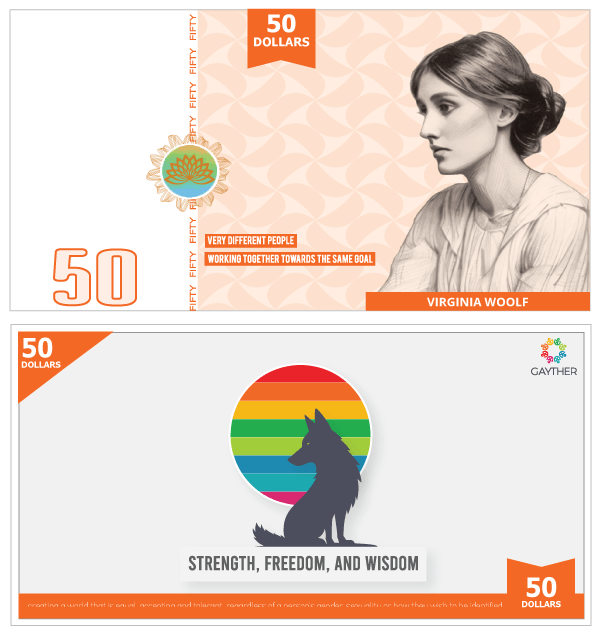
English Writer and Author
Kensington, London, UK
b. 1882 - d. 1941
Kensington, London, UK
b. 1882 - d. 1941
Virginia Woolf was an English writer and novelist, and one of the most influential figures in twentieth-century literature. Through her writing, she challenged traditional ideas about gender, relationships, sexuality and women’s roles in society. Her experimental approach to literature made her a leading figure in the modernist movement, while her exploration of women’s lives and identity has made her an important figure in LGBTQIA+ history.
Adeline Virginia Stephen was born on 25 January 1882 in London, England, to Sir Leslie Stephen, a writer, historian and literary critic, and Julia Prinsep Jackson. She was the third of four children and grew up immersed in books, surrounded by writers and artists. Her father maintained an extensive personal library, and although Virginia did not receive a conventional formal education, she was largely educated at home and had access to literature from an early age.
Both privilege and profound loss marked Virginia’s childhood. At thirteen, her mother died, an event that devastated her and was soon followed by her first serious mental health crisis. Her half-sister Stella died in 1897, and her father’s death in 1904 brought another devastating loss. These experiences of grief and bereavement would remain significant influences throughout her life.
After their father’s death, Virginia and her sister Vanessa moved with their brothers to Bloomsbury in London. There, they quickly became part of a circle of writers, artists, philosophers, and intellectuals that would come to be known as the Bloomsbury Group. The group questioned many of the social, artistic and sexual conventions of Victorian and Edwardian Britain, creating an environment in which unconventional ideas about relationships, art and society could be discussed more openly.
Virginia began writing professionally, contributing essays, reviews and articles to newspapers and literary journals. Her first novel, The Voyage Out, was published in 1915. She went on to become one of the most celebrated writers of her generation, producing works such as Mrs Dalloway, To the Lighthouse and Orlando. Her writing was revolutionary, in part because it focussed on the inner lives of her characters. Rather than simply describing what people did, Woolf explored their thoughts, memories, emotions and perceptions, experimenting with time, perspective and narrative structure.
In 1912, Virginia married writer Leonard Woolf, a marriage that lasted for the rest of her life. Leonard was a constant source of support during her recurring periods of mental illness. Virginia also formed several intense emotional and romantic relationships with women. The most famous was her relationship with Vita Sackville-West, a writer, poet and aristocrat. The two women met in 1922 and soon developed a close friendship that grew into a romantic and sexual relationship. Although their relationship was not exclusive and both women had other relationships, they remained deeply connected for many years.
Woolf’s relationship with Vita would inspire one of her most celebrated and unconventional novels, Orlando, published in 1928. The novel follows a character who lives for centuries, beginning life as a man and later becoming a woman. Orlando’s identity remains remarkably fluid, allowing Woolf to explore gender, sexuality, love and the expectations society places on men and women.
Woolf’s writing about women’s lives extended beyond fiction. In A Room of One’s Own (1929), she argued that women needed financial independence and a private space in which to write and create. Her claim that a woman needs money and a room of her own became an enduring statement about the relationship between gender, independence and artistic freedom.
Virginia Woolf’s life was also marked by recurring, severe episodes of mental distress. Despite periods of remarkable creativity and achievement, she experienced several mental health crises throughout her life. The pressures of the Second World War, the destruction of her London home, and the ongoing strain of her mental illness contributed to a particularly difficult period towards the end of her life. In 1941, at the age of fifty-nine, Virginia Woolf walked into the River Ouse near her home in Sussex. Before her death, she wrote letters to Leonard and her sister Vanessa, expressing her love for them and explaining that she believed she could not endure another severe episode of mental illness.
Virginia Woolf is important not only because she became one of the twentieth century’s greatest writers, but also because she questioned the boundaries that society imposed on women, relationships, identity and creativity. Despite the odds, through her writing and her life, she challenged the idea that gender should determine what a person could become or how they were expected to live. Virginia, may you never be forgotten.
Adeline Virginia Stephen was born on 25 January 1882 in London, England, to Sir Leslie Stephen, a writer, historian and literary critic, and Julia Prinsep Jackson. She was the third of four children and grew up immersed in books, surrounded by writers and artists. Her father maintained an extensive personal library, and although Virginia did not receive a conventional formal education, she was largely educated at home and had access to literature from an early age.
Both privilege and profound loss marked Virginia’s childhood. At thirteen, her mother died, an event that devastated her and was soon followed by her first serious mental health crisis. Her half-sister Stella died in 1897, and her father’s death in 1904 brought another devastating loss. These experiences of grief and bereavement would remain significant influences throughout her life.
After their father’s death, Virginia and her sister Vanessa moved with their brothers to Bloomsbury in London. There, they quickly became part of a circle of writers, artists, philosophers, and intellectuals that would come to be known as the Bloomsbury Group. The group questioned many of the social, artistic and sexual conventions of Victorian and Edwardian Britain, creating an environment in which unconventional ideas about relationships, art and society could be discussed more openly.
Virginia began writing professionally, contributing essays, reviews and articles to newspapers and literary journals. Her first novel, The Voyage Out, was published in 1915. She went on to become one of the most celebrated writers of her generation, producing works such as Mrs Dalloway, To the Lighthouse and Orlando. Her writing was revolutionary, in part because it focussed on the inner lives of her characters. Rather than simply describing what people did, Woolf explored their thoughts, memories, emotions and perceptions, experimenting with time, perspective and narrative structure.
In 1912, Virginia married writer Leonard Woolf, a marriage that lasted for the rest of her life. Leonard was a constant source of support during her recurring periods of mental illness. Virginia also formed several intense emotional and romantic relationships with women. The most famous was her relationship with Vita Sackville-West, a writer, poet and aristocrat. The two women met in 1922 and soon developed a close friendship that grew into a romantic and sexual relationship. Although their relationship was not exclusive and both women had other relationships, they remained deeply connected for many years.
Woolf’s relationship with Vita would inspire one of her most celebrated and unconventional novels, Orlando, published in 1928. The novel follows a character who lives for centuries, beginning life as a man and later becoming a woman. Orlando’s identity remains remarkably fluid, allowing Woolf to explore gender, sexuality, love and the expectations society places on men and women.
Woolf’s writing about women’s lives extended beyond fiction. In A Room of One’s Own (1929), she argued that women needed financial independence and a private space in which to write and create. Her claim that a woman needs money and a room of her own became an enduring statement about the relationship between gender, independence and artistic freedom.
Virginia Woolf’s life was also marked by recurring, severe episodes of mental distress. Despite periods of remarkable creativity and achievement, she experienced several mental health crises throughout her life. The pressures of the Second World War, the destruction of her London home, and the ongoing strain of her mental illness contributed to a particularly difficult period towards the end of her life. In 1941, at the age of fifty-nine, Virginia Woolf walked into the River Ouse near her home in Sussex. Before her death, she wrote letters to Leonard and her sister Vanessa, expressing her love for them and explaining that she believed she could not endure another severe episode of mental illness.
Virginia Woolf is important not only because she became one of the twentieth century’s greatest writers, but also because she questioned the boundaries that society imposed on women, relationships, identity and creativity. Despite the odds, through her writing and her life, she challenged the idea that gender should determine what a person could become or how they were expected to live. Virginia, may you never be forgotten.
Understanding the world around us with
Discover the Gayther Indices, community-related trackers that are among the most comprehensive LGBTQIA+ resources worldwide, covering a wide range of themes from global equality to healthcare systems, to help inform and engage everyone. Whether you are looking for the perfect travel destination or aiming to better understand and support equal rights for community members across the globe, the Gayther Indices are your essential international resource.
LGBTQIA+ Pioneers
2027
Mexican lawyer, magistrate and LGBTQIA+ Activist
Saltillo, Coahuila, Mexico
b. 1984 - d. 2023
Saltillo, Coahuila, Mexico
b. 1984 - d. 2023
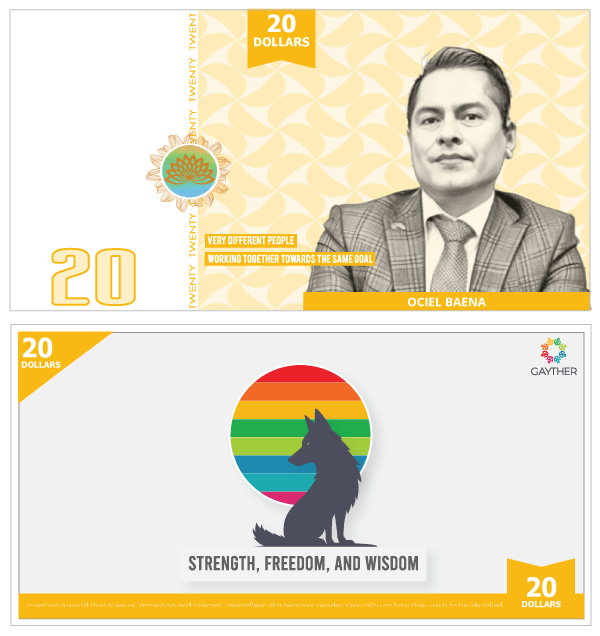
Ociel Baena was a Mexican lawyer, electoral magistrate and LGBTQIA+ activist who became one of the most prominent advocates for the recognition and equality of non-binary people in Mexico. In October 2022, Ociel became the first openly non-binary person to serve as an electoral magistrate in Mexico and in Latin America. Through their legal career, activism and public visibility, they challenged traditional ideas about gender. They demonstrated that non-binary people could hold positions of authority within Mexico’s legal and political institutions.
Ociel was born on 9 December 1984 in Saltillo, in the Mexican state of Coahuila. They were one of eight children of Juan Baena Hernández, a mechanical engineer, and María de la Luz Saucedo. Ociel studied law at the Faculty of Jurisprudence of the Autonomous University of Coahuila, where they later completed a master’s degree in Constitutional Law and Government Policies. As Ociel’s career developed, their work increasingly centred on electoral law, human rights and equality. They worked within Mexico’s electoral institutions and also taught electoral law, building a reputation as a highly knowledgeable legal professional. Their career was particularly significant for their use of expertise to advocate for the political and electoral rights of LGBTQIA+ people and for greater inclusion within Mexico’s democratic institutions.
In October 2022, Ociel made history by taking office at the Electoral Tribunal of the State of Aguascalientes. They became the first openly non-binary person to serve as an electoral magistrate in Mexico and Latin America. Their appointment was significant not only for the title they held but also for the visibility it gave to non-binary people within a traditionally conservative area of public life. Ociel openly held the position while expressing their gender identity and insisting that the language used by public institutions recognise people beyond the traditional male and female categories.
In addition to their position, Ociel also became a key figure in the campaign for official recognition of non-binary identities. In May 2023, they became the first person in Mexico to receive a passport with a non-binary gender marker. Their efforts also helped bring questions of gender identity to the centre of public discussion, prompting institutions to reconsider forms, titles and documents that had traditionally recognised only men and women. They spoke openly about discrimination, representation and the right to live according to one’s gender identity.
However, that visibility also came at a cost. Ociel faced hostility and death threats because of their identity and activism. In July 2023, they were granted an order of protection following threats. Sadly, on 13 November 2023, at the age of 38, Ociel was found dead at their home in Aguascalientes, alongside their partner, Dorian Daniel Nieves Herrera. Their deaths shocked Mexico and the international LGBTQIA+ community. Authorities initially presented a murder-suicide explanation, but Ociel’s family and supporters questioned that account and called for a thorough investigation. The circumstances surrounding their deaths therefore remain an important and sensitive part of their story, particularly given the threats Ociel had received during their lifetime.
Ociel Baena’s life was tragically short, but the barriers they broke in those years were enormous. They became a pioneering figure in Mexico’s legal system, an advocate for LGBTQIA+ political participation, and one of the most visible non-binary people in Latin America. Their achievements made it increasingly difficult for institutions to ignore the existence and rights of non-binary people.
Ociel’s legacy is not merely that they were the first. They showed what was possible when someone refused to hide who they were, even while working within institutions that had historically offered little space for people outside the gender binary. Their life helped pave the way for those who would follow, proving that a “first” need not remain an exception. Ociel Baena did not simply become the first non-binary magistrate in Mexico; they helped make it possible for others to imagine themselves as the next. Ociel and Dorian, may you never be forgotten.
Ociel was born on 9 December 1984 in Saltillo, in the Mexican state of Coahuila. They were one of eight children of Juan Baena Hernández, a mechanical engineer, and María de la Luz Saucedo. Ociel studied law at the Faculty of Jurisprudence of the Autonomous University of Coahuila, where they later completed a master’s degree in Constitutional Law and Government Policies. As Ociel’s career developed, their work increasingly centred on electoral law, human rights and equality. They worked within Mexico’s electoral institutions and also taught electoral law, building a reputation as a highly knowledgeable legal professional. Their career was particularly significant for their use of expertise to advocate for the political and electoral rights of LGBTQIA+ people and for greater inclusion within Mexico’s democratic institutions.
In October 2022, Ociel made history by taking office at the Electoral Tribunal of the State of Aguascalientes. They became the first openly non-binary person to serve as an electoral magistrate in Mexico and Latin America. Their appointment was significant not only for the title they held but also for the visibility it gave to non-binary people within a traditionally conservative area of public life. Ociel openly held the position while expressing their gender identity and insisting that the language used by public institutions recognise people beyond the traditional male and female categories.
In addition to their position, Ociel also became a key figure in the campaign for official recognition of non-binary identities. In May 2023, they became the first person in Mexico to receive a passport with a non-binary gender marker. Their efforts also helped bring questions of gender identity to the centre of public discussion, prompting institutions to reconsider forms, titles and documents that had traditionally recognised only men and women. They spoke openly about discrimination, representation and the right to live according to one’s gender identity.
However, that visibility also came at a cost. Ociel faced hostility and death threats because of their identity and activism. In July 2023, they were granted an order of protection following threats. Sadly, on 13 November 2023, at the age of 38, Ociel was found dead at their home in Aguascalientes, alongside their partner, Dorian Daniel Nieves Herrera. Their deaths shocked Mexico and the international LGBTQIA+ community. Authorities initially presented a murder-suicide explanation, but Ociel’s family and supporters questioned that account and called for a thorough investigation. The circumstances surrounding their deaths therefore remain an important and sensitive part of their story, particularly given the threats Ociel had received during their lifetime.
Ociel Baena’s life was tragically short, but the barriers they broke in those years were enormous. They became a pioneering figure in Mexico’s legal system, an advocate for LGBTQIA+ political participation, and one of the most visible non-binary people in Latin America. Their achievements made it increasingly difficult for institutions to ignore the existence and rights of non-binary people.
Ociel’s legacy is not merely that they were the first. They showed what was possible when someone refused to hide who they were, even while working within institutions that had historically offered little space for people outside the gender binary. Their life helped pave the way for those who would follow, proving that a “first” need not remain an exception. Ociel Baena did not simply become the first non-binary magistrate in Mexico; they helped make it possible for others to imagine themselves as the next. Ociel and Dorian, may you never be forgotten.
Explore the world
Travelling is one of the most popular hobbies and interests around the world. Exploring new places, cultures, and experiences is both exciting and rewarding. For most people, knowing the best time to visit and basic travel details is enough; however, for the LGBTQIA+ community, further research is necessary. The Gayther Travel guides cover hundreds of countries and regions, providing essential travel information, useful terms in local languages, and important health advice, including details on how each country treats members of the LGBTQIA+ community. Discover Gayther guides today.
LGBTQIA+ Pioneers
2027
German Teacher, Writer, and Pioneering Campaigner
Berlin, Germany
b. 1874 - d. 1945
Berlin, Germany
b. 1874 - d. 1945
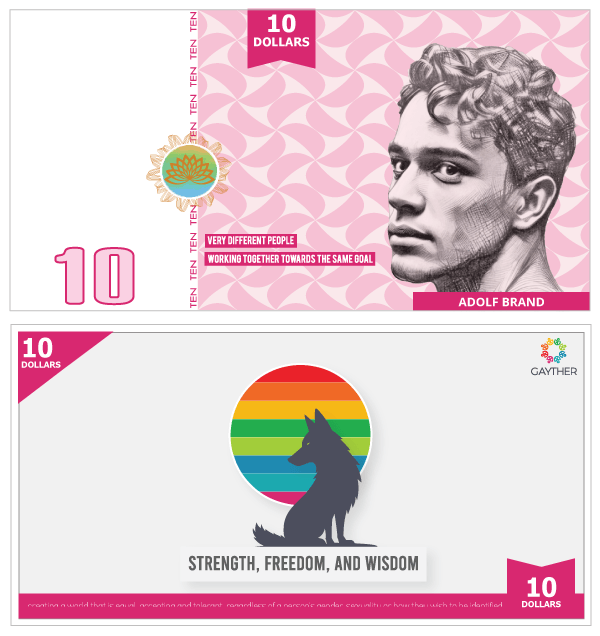
Adolf Brand was a German writer, publisher, teacher and activist who became one of the earliest and most outspoken campaigners for homosexual emancipation. At a time when male homosexuality was criminalised in Germany and openly discussing same-sex relationships could carry serious consequences, Brand refused to remain silent. Through his writing, publishing and activism, he challenged the laws and social attitudes that persecuted homosexual men and was among the first to use outing to fight hypocrisy. Brand’s legacy is that he ultimately helped lay the foundations for one of the world’s earliest organised homosexual rights movements.
Adolf Brand was born on 14 November 1874 in Berlin, then part of the German Empire, and grew up in Wilhelmshagen, on the city’s south-eastern outskirts. He was the son of Franz Brand, an office messenger who later became a glazier, and of Auguste Brand. Brand briefly trained as a schoolteacher but left the profession after antireligious writings were found among his possessions. He subsequently turned to writing and publishing, becoming increasingly interested in individual freedom and in opposing social conventions.
In 1896, at just 21, Brand founded Der Eigene, which became the world’s first regularly published homosexual magazine. The title can be translated in several ways, including “The Unique One” or “The Self-Determined One”, all of which reflected Brand’s belief in individual freedom and self-ownership. Initially broader in scope, the publication increasingly focused on male homosexuality, homoerotic literature, art, culture, and ideas about male friendship and love.
Der Eigene was revolutionary for its time. It offered homosexual men something extraordinarily rare in nineteenth-century Germany: a publication in which same-sex desire could be discussed openly and presented without automatically being treated as shameful or pathological. Brand used his magazine not only to entertain readers but also to challenge the social assumptions that forced homosexual men into secrecy.
Brand’s activism also brought him into contact with other pioneers of the emerging gay rights movement. He worked with Dr Magnus Hirschfeld and others in the campaign against Paragraph 175, including supporting petitions calling for its abolition. However, Brand and Hirschfeld differed fundamentally in their understanding of homosexuality. Hirschfeld placed considerable emphasis on scientific research and on homosexuality as a natural sexual variation. Brand rejected medical explanations and believed that homosexual men should organise around their own identity, culture and freedom.
Brand was also an early advocate of what would now be described as “coming out”. He believed that openly gay public figures could help challenge prejudice simply by refusing to hide their sexuality. However, his methods were highly controversial. Brand sometimes sought to expose men publicly whom he believed were homosexual, including politicians and other prominent figures, without their consent. His belief that outing could be used as a political weapon remains one of the most problematic aspects of his legacy. It is an important reminder that the early gay rights movement did not always share the principles that guide LGBTQIA+ activism today.
The relative freedom of the Weimar Republic came to an abrupt end when the Nazis came to power in 1933. The Nazi regime persecuted homosexual men, raided homosexual organisations, and destroyed or confiscated material relating to homosexual culture and activism. Brand’s home and publishing operation were repeatedly targeted, and large quantities of his books and papers were seized. Der Eigene could no longer continue, ending the pioneering publication that had begun almost four decades earlier. By 1933, Brand had effectively abandoned gay rights activism and withdrawn from public life.
In 1920, he married Elise Behrendt, a nurse who was aware of and accepted his homosexuality. The couple remained together for the rest of his life. By the Nazi period, Brand was living a much quieter life, removed from the activism that had defined his earlier decades. Sadly, Adolf Brand, aged 70, and Elise were killed on 26 February 1945 when an Allied bombing raid struck their home in Wilhelmshagen, Berlin. The bombing occurred only a few months before the end of the Second World War and brought a tragic end to the life of one of the earliest organised campaigners for homosexual emancipation.
Adolf Brand’s legacy is complex, yet his importance is undeniable. Long before the modern LGBTQIA+ rights movement existed, he published openly about homosexuality, challenging the criminalisation of homosexual men and insisting that they should not be forced into lives of secrecy and shame. Through Der Eigene, he helped create a public homosexual culture at a time when simply acknowledging such a culture was an act of defiance. Adolf Brand was not the last to fight for homosexual freedom. He was among the first to make the fight impossible to ignore. Adolf Brand, may you never be forgotten.
Adolf Brand was born on 14 November 1874 in Berlin, then part of the German Empire, and grew up in Wilhelmshagen, on the city’s south-eastern outskirts. He was the son of Franz Brand, an office messenger who later became a glazier, and of Auguste Brand. Brand briefly trained as a schoolteacher but left the profession after antireligious writings were found among his possessions. He subsequently turned to writing and publishing, becoming increasingly interested in individual freedom and in opposing social conventions.
In 1896, at just 21, Brand founded Der Eigene, which became the world’s first regularly published homosexual magazine. The title can be translated in several ways, including “The Unique One” or “The Self-Determined One”, all of which reflected Brand’s belief in individual freedom and self-ownership. Initially broader in scope, the publication increasingly focused on male homosexuality, homoerotic literature, art, culture, and ideas about male friendship and love.
Der Eigene was revolutionary for its time. It offered homosexual men something extraordinarily rare in nineteenth-century Germany: a publication in which same-sex desire could be discussed openly and presented without automatically being treated as shameful or pathological. Brand used his magazine not only to entertain readers but also to challenge the social assumptions that forced homosexual men into secrecy.
Brand’s activism also brought him into contact with other pioneers of the emerging gay rights movement. He worked with Dr Magnus Hirschfeld and others in the campaign against Paragraph 175, including supporting petitions calling for its abolition. However, Brand and Hirschfeld differed fundamentally in their understanding of homosexuality. Hirschfeld placed considerable emphasis on scientific research and on homosexuality as a natural sexual variation. Brand rejected medical explanations and believed that homosexual men should organise around their own identity, culture and freedom.
Brand was also an early advocate of what would now be described as “coming out”. He believed that openly gay public figures could help challenge prejudice simply by refusing to hide their sexuality. However, his methods were highly controversial. Brand sometimes sought to expose men publicly whom he believed were homosexual, including politicians and other prominent figures, without their consent. His belief that outing could be used as a political weapon remains one of the most problematic aspects of his legacy. It is an important reminder that the early gay rights movement did not always share the principles that guide LGBTQIA+ activism today.
The relative freedom of the Weimar Republic came to an abrupt end when the Nazis came to power in 1933. The Nazi regime persecuted homosexual men, raided homosexual organisations, and destroyed or confiscated material relating to homosexual culture and activism. Brand’s home and publishing operation were repeatedly targeted, and large quantities of his books and papers were seized. Der Eigene could no longer continue, ending the pioneering publication that had begun almost four decades earlier. By 1933, Brand had effectively abandoned gay rights activism and withdrawn from public life.
In 1920, he married Elise Behrendt, a nurse who was aware of and accepted his homosexuality. The couple remained together for the rest of his life. By the Nazi period, Brand was living a much quieter life, removed from the activism that had defined his earlier decades. Sadly, Adolf Brand, aged 70, and Elise were killed on 26 February 1945 when an Allied bombing raid struck their home in Wilhelmshagen, Berlin. The bombing occurred only a few months before the end of the Second World War and brought a tragic end to the life of one of the earliest organised campaigners for homosexual emancipation.
Adolf Brand’s legacy is complex, yet his importance is undeniable. Long before the modern LGBTQIA+ rights movement existed, he published openly about homosexuality, challenging the criminalisation of homosexual men and insisting that they should not be forced into lives of secrecy and shame. Through Der Eigene, he helped create a public homosexual culture at a time when simply acknowledging such a culture was an act of defiance. Adolf Brand was not the last to fight for homosexual freedom. He was among the first to make the fight impossible to ignore. Adolf Brand, may you never be forgotten.

Positive representation helps in
Acceptance and coming to terms with a part of what makes you can be challenging for many people. The Gayther pride in series is about celebrating all things relating to sexualities, gender identities and special groups. Showcasing the exceptional people, interesting facts and ways to connect with those unique communities, all designed to help and promote pride in LGBTQIA+ identities.
LGBTQIA+ Pioneers
2027
Danish Gay Rights Activists
Copenhagen, Denmark
b. 1915 - d. 2011
Copenhagen, Denmark
b. 1915 - d. 2011
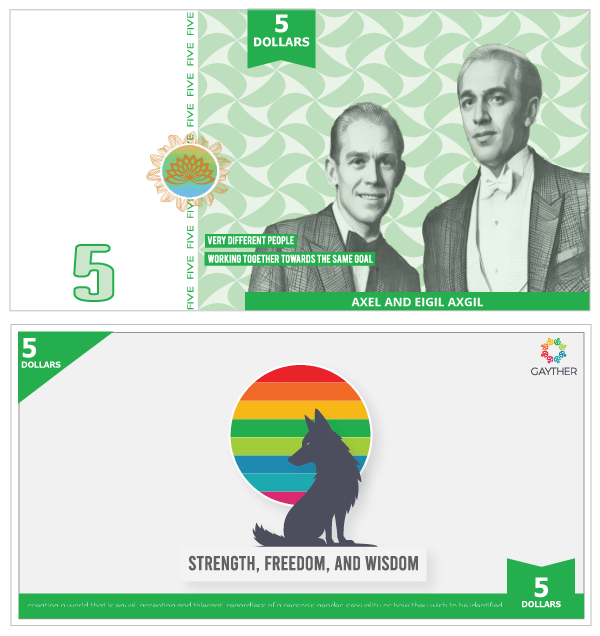
Axel and Eigil Axgil were Danish LGBTQIA+ activists and partners who devoted much of their lives to fighting for the rights, dignity and acceptance of homosexual people. Together, they helped establish one of the world’s earliest homosexual rights organisations, campaigned against discrimination and spent decades challenging the laws and attitudes that forced gay people to live in secrecy. Their determination eventually helped change Danish law, and in 1989 they made history as the first same-sex couple in the world to enter into a legally recognised registered partnership.
Axel Lundahl-Madsen was born on 29 April 1915, and Eigil Eskildsen on 24 March 1922, both in Denmark. Axel was already involved in the emerging homosexual rights movement when he helped establish Forbundet af 1948 in 1948. The organisation, later known as the Danish National Association for Gays and Lesbians, was created to campaign for the rights of homosexual people and to provide community and support, at a time when homosexuality was widely condemned and many gay people were forced to hide their identities.
Axel and Eigil met in Copenhagen around 1950 and soon after became partners. Their relationship developed at a time when homosexuality remained heavily stigmatised and when gay men and women had few opportunities to live openly. Rather than letting fear dictate their lives, the two men chose to build their relationship alongside their activism. Eigil became increasingly involved in the movement, and together they became one of its most recognisable couples.
In the early 1950s, Axel and Eigil became involved in publishing Vennen, meaning “The Friend”, a magazine that provided information, entertainment and a sense of community for homosexual people in Denmark. The publication helped connect people who often had few other ways to find one another, and it gave gay men and women a rare opportunity to see their lives and experiences reflected in print.
The couple eventually adopted the surname Axgil, combining their first names, Axel and Eigil. The name became a public symbol of their partnership and the life they had built together. Their willingness to live openly and their involvement in homosexual activism brought them into conflict with the authorities. In 1955, they were convicted of activities at a homosexual club and received short prison sentences. However, rather than abandoning their activism, the experience strengthened their resolve to continue fighting for homosexual rights.
Over the following decades, Danish society gradually became more accepting of homosexuality, and Axel and Eigil continued campaigning for greater equality. They believed that homosexual couples should be entitled to many of the same rights and protections as heterosexual couples, including legal recognition of their relationships. Their activism was part of a broader movement that challenged discrimination and helped transform attitudes towards gay rights in Denmark.
Their greatest and most personal victory came in 1989, when Denmark became the first country in the world to introduce a legal framework for registered partnerships for same-sex couples. On 1 October 1989, Axel and Eigil Axgil became the first same-sex couple in the world to enter into a legally recognised registered partnership. The ceremony, held at Copenhagen City Hall, drew international attention.
Axel and Eigil had spent almost four decades campaigning for a society in which gay people could live openly and have their relationships recognised by law. Now, after years of fighting for other couples’ rights, the law finally recognised their own relationship. The significance of that ceremony extended far beyond Denmark. The Danish registered partnership law became an important milestone in LGBTQIA+ rights history and demonstrated that governments could legally recognise same-sex relationships. Other countries would eventually follow, introducing their own forms of registered partnership and, later, marriage equality.
Sadly, Eigil died in 1995 at the age of 73, while Axel lived until 2011, dying at 96. The story of Axel and Eigil Axgil is remarkable because they did not merely campaign for a future they hoped to see one day. They lived to see the world change. For decades, they fought for homosexual couples to be recognised as deserving of love, dignity and equality. In 1989, they stood together at Copenhagen City Hall and became the first same-sex couple in the world to have their relationship legally recognised.
Their achievement was not the result of a single day or a single law. It was the result of decades of persistence, courage and love. Axel and Eigil helped prove that social change could begin with people willing to stand together and demand that the law recognise their humanity. Their love became part of history, but perhaps their greatest legacy is that they helped make it possible for countless other couples to have their love recognised too. Axel and Eigil, >may you never be forgotten.
Axel Lundahl-Madsen was born on 29 April 1915, and Eigil Eskildsen on 24 March 1922, both in Denmark. Axel was already involved in the emerging homosexual rights movement when he helped establish Forbundet af 1948 in 1948. The organisation, later known as the Danish National Association for Gays and Lesbians, was created to campaign for the rights of homosexual people and to provide community and support, at a time when homosexuality was widely condemned and many gay people were forced to hide their identities.
Axel and Eigil met in Copenhagen around 1950 and soon after became partners. Their relationship developed at a time when homosexuality remained heavily stigmatised and when gay men and women had few opportunities to live openly. Rather than letting fear dictate their lives, the two men chose to build their relationship alongside their activism. Eigil became increasingly involved in the movement, and together they became one of its most recognisable couples.
In the early 1950s, Axel and Eigil became involved in publishing Vennen, meaning “The Friend”, a magazine that provided information, entertainment and a sense of community for homosexual people in Denmark. The publication helped connect people who often had few other ways to find one another, and it gave gay men and women a rare opportunity to see their lives and experiences reflected in print.
The couple eventually adopted the surname Axgil, combining their first names, Axel and Eigil. The name became a public symbol of their partnership and the life they had built together. Their willingness to live openly and their involvement in homosexual activism brought them into conflict with the authorities. In 1955, they were convicted of activities at a homosexual club and received short prison sentences. However, rather than abandoning their activism, the experience strengthened their resolve to continue fighting for homosexual rights.
Over the following decades, Danish society gradually became more accepting of homosexuality, and Axel and Eigil continued campaigning for greater equality. They believed that homosexual couples should be entitled to many of the same rights and protections as heterosexual couples, including legal recognition of their relationships. Their activism was part of a broader movement that challenged discrimination and helped transform attitudes towards gay rights in Denmark.
Their greatest and most personal victory came in 1989, when Denmark became the first country in the world to introduce a legal framework for registered partnerships for same-sex couples. On 1 October 1989, Axel and Eigil Axgil became the first same-sex couple in the world to enter into a legally recognised registered partnership. The ceremony, held at Copenhagen City Hall, drew international attention.
Axel and Eigil had spent almost four decades campaigning for a society in which gay people could live openly and have their relationships recognised by law. Now, after years of fighting for other couples’ rights, the law finally recognised their own relationship. The significance of that ceremony extended far beyond Denmark. The Danish registered partnership law became an important milestone in LGBTQIA+ rights history and demonstrated that governments could legally recognise same-sex relationships. Other countries would eventually follow, introducing their own forms of registered partnership and, later, marriage equality.
Sadly, Eigil died in 1995 at the age of 73, while Axel lived until 2011, dying at 96. The story of Axel and Eigil Axgil is remarkable because they did not merely campaign for a future they hoped to see one day. They lived to see the world change. For decades, they fought for homosexual couples to be recognised as deserving of love, dignity and equality. In 1989, they stood together at Copenhagen City Hall and became the first same-sex couple in the world to have their relationship legally recognised.
Their achievement was not the result of a single day or a single law. It was the result of decades of persistence, courage and love. Axel and Eigil helped prove that social change could begin with people willing to stand together and demand that the law recognise their humanity. Their love became part of history, but perhaps their greatest legacy is that they helped make it possible for countless other couples to have their love recognised too. Axel and Eigil, >may you never be forgotten.

Extraordinary people
Over the past 50 years, the LGBTQIA+ global community has seen many positive developments, with rights and protections for its members greatly enhanced. These changes are a direct result of the extraordinary individuals who have stood up, often at considerable personal risk, to advocate for and defend community rights. Discover more about some of these remarkable individuals today.
discover more about all of the
exceptional individuals

The LGBTQIA+, Gay, Lesbian, Bisexual and Transgender communities have been around for thousands of years and referenced in many texts, scriptures and paintings from as early as 2400 BC. The diverse community includes many famous and notable people, from emperors, kings, poets, and politicians. Many of which have played key and important roles throughout history.
Over the centuries, the treatment of the community and its members’ rights has changed, from individuals being tolerated and often on the fringe of society to becoming active targets and facing brutal persecution. It was not until the end of the 18th Century that things improved. Large-scale global change began only in the 20th Century, typically from the 1970s to the present day.
The New York Stonewall Riots in 1969 became a catalyst for the global gay liberation movement. However, many brave individuals have stood up and championed the community throughout history, often at significant personal risk. It is often hard to imagine what life must have been like, even as recently as 40 years ago, left alone for 200 years. With conservative and religious beliefs dominating society, many individuals were required to suppress and hide their true selves for fear of persecution.
It took a group of brave and fearless individuals to stand up and be heard. To show the world that the rules, laws and opinions had to change. The change resulted in the freedoms and rights many of us now enjoy. Increase acceptance and protection within the law, directly given to the work and effort of these exceptional individuals. Though there have been significant developments relating to the equality status for many members of the LGBTQIA+ community, they are not so fortunate. Many people still live in countries and under regimes; even today, they are actively targeted and in constant fear for their lives. In those countries right now, activists are fighting to change the rights and laws. As individuals and all the risks, and for their bravery and desire to see change, we are truly grateful for all they are doing for the global community. We know many of those activists will become pioneers in the future.
Gayther feels it is crucial to highlight and focus on these exceptional pioneers as a community and on their contributions to fairer, more tolerant societies worldwide. To showcase all they have accomplished and ensure they are never forgotten, we would like to introduce you to Gayther’s annual pioneer collection.
Other collections: ADVOCATES | PIONEER COLLECTIONS: 2027 | 2026 | 2025 | 2024 | 2023 | 2022 | 2021 | 2020 | 2019
Over the centuries, the treatment of the community and its members’ rights has changed, from individuals being tolerated and often on the fringe of society to becoming active targets and facing brutal persecution. It was not until the end of the 18th Century that things improved. Large-scale global change began only in the 20th Century, typically from the 1970s to the present day.
The New York Stonewall Riots in 1969 became a catalyst for the global gay liberation movement. However, many brave individuals have stood up and championed the community throughout history, often at significant personal risk. It is often hard to imagine what life must have been like, even as recently as 40 years ago, left alone for 200 years. With conservative and religious beliefs dominating society, many individuals were required to suppress and hide their true selves for fear of persecution.
It took a group of brave and fearless individuals to stand up and be heard. To show the world that the rules, laws and opinions had to change. The change resulted in the freedoms and rights many of us now enjoy. Increase acceptance and protection within the law, directly given to the work and effort of these exceptional individuals. Though there have been significant developments relating to the equality status for many members of the LGBTQIA+ community, they are not so fortunate. Many people still live in countries and under regimes; even today, they are actively targeted and in constant fear for their lives. In those countries right now, activists are fighting to change the rights and laws. As individuals and all the risks, and for their bravery and desire to see change, we are truly grateful for all they are doing for the global community. We know many of those activists will become pioneers in the future.
Gayther feels it is crucial to highlight and focus on these exceptional pioneers as a community and on their contributions to fairer, more tolerant societies worldwide. To showcase all they have accomplished and ensure they are never forgotten, we would like to introduce you to Gayther’s annual pioneer collection.
Other collections: ADVOCATES | PIONEER COLLECTIONS: 2027 | 2026 | 2025 | 2024 | 2023 | 2022 | 2021 | 2020 | 2019

Is there someone you believe should be
The Gayther annual Pioneer collection is designed to highlight and showcase exceptional individuals from or associated with the LGBTQIA+ community. If you know of someone you believe should be featured, we would love to hear from you. As a global service, we love to feature lesser-known international advocates and pioneers whenever possible

Connect with the community
Gayther Affinity is a private platform for the global LGBTQIA+ community. A space that gives you the freedom to be yourself. Helping you communicate with and connect to people similar to yourself. People from around the world from all age groups and backgrounds. Signup for your free Affinity account today

Helping you get the support you need
When disaster hits, it is crucial to get the right information quickly. From the correct emergency telephone number wherever you are in the world to how we communicate with a medical professional during an emergency, Gayther offers a range of useful tools, such as the emergency telephone number tool and the medical diagnosis tool. Discover the Emergency Services tools today.
When travelling, as a non-native speaker of a language or when you cannot speak, communicating how you think and feel to a medical practitioner can be challenging. The medical diagnosis interpreter, also known as the MDI, is a free click-and-point solution where you can use literal translations for up to 89 different languages

Knowing the local emergency telephone numbers is crucial, whether at home or abroad. The Gayther guide not only provides the various telephone numbers for the emergency services worldwide but also common phrases in the native language
When escaping persecution or conflict, travelling through a country as a non-native speaker of a language or when you cannot speak is difficult. Quickly communicating your needs and any required assistance is challenging and often time-critical. The refugee communication tool is an essential tool designed to help anyone in a problematic situation share their circumstances with those in a position to help
Gayther
your community resources
A community platform that features a variety of tools, services, guides, and much more. Free tools and services tailored toward the global LGBTQIA+ community

The big directory comprises fourteen groups and over one thousand categories, from travel accommodation to home maintenance

There are thousands of events taking place, it is not always easy to know what is going on and when, Gayther can help

The Care Providers and Services directory lists businesses and services that are inclusive and welcoming to all

There are millions of non-profit organisations, advice services, and support groups worldwide, all designed to help you

The RM Directory is designed to showcase organisations and services experienced in assisting those seeking refuge or relocating. Whether a refugee who is forced to leave home due to war or a migrant seeking out better living conditions, the RM Directory can help

Resources designed to help you engage
With more than a thousand data points on weather stations around the world, hundreds of LGBTQIA+ country and state travel guides, and articles, fun activities, and games related to the community, there is something for everyone on Gayther. Support your friends, followers, or customers by including a badge or one of the many colourful QR codes in your newsletter, blog, vlog, or website to direct them to resources that connect directly to you, your business, or your service. Discover QR codes and gayther badges today.
When we explore, we learn; the more we know, the greater our
understanding of the world
Gayther is a positive platform for everyone. One that empowers people to understand more about the LGBTQIA+ community by dispelling misinformation, to showcase all aspects of the exceptional and diverse global community and all that it contributes to the world


Planning a trip? Gayther provides extensive country guides for every country across the globe

Find the information you need quickly with the wide range of guides available on Gayther

Be inspired and have some fun, with a wide range of articles, personality tests, quizzes and crosswords on offer

Discover more about sexuality, from the various identities to inspiring content and information

Discover more about the unique and diverse gender identities within the LGBTQIA+ community

Discover more about the special groups and the people and organisations supporting and helping the LGBTQIA+ community

Not sure what you are looking for? There are many ways to find what you need quickly; the search section provides links to the many search services

Impress your friends with key facts and keep updated on the latest developments and trends within the community

Discover Gayther Trinary, three unique services focused on the different aspects and requirements of the LGBTQIA+ community
IMPORTANT DISCLAIMER: The advocates’ and pioneers’ collections are designed to highlight exceptional individuals worldwide. Though Gayther is an LGBTQIA+ community resource, some of the individuals featured may not identify or have confirmed their sexual or gender identity. Gayther believes in inclusivity and in people’s right to choose whether to share personal details, including those in the public eye. Featuring a person is not meant to cause offence or controversy; instead, it is only our intention to showcase exceptional individuals. Though we endeavour to keep all information across the site up to date, we do not guarantee the accuracy or completeness of any information displayed. This page may contain external links to third-party websites; Gayther provides these links for your convenience and does not endorse, warrant or recommend any particular products or services. By clicking on any external links, you will leave Gayther and be taken to the third-party website, which you do so at your own risk and by accessing the site, you will be required to comply with the external third party’s terms and conditions of use and privacy policies