














From Revolution to Footnote: Rebranding Queer and Black Lives in History
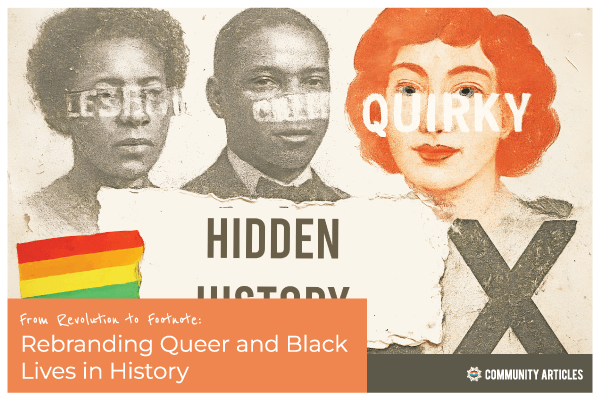
In history, much of what we know comes from books, written accounts, and all that we are taught at school. A type of collection narration that is frequently repeated and perpetuated in society, one that often changes, even ignores specific groups, whether in a bid to protect the legacies of historical figures or to shift the narrative to suit a particular perspective or worldview. Much of what we know is influenced by those who tell the stories, those who share the facts, and those who pass down heritage through the generations. Many cultures have long portrayed an image of heteronormative, white and male-centric history; however, thousands of years of cultures, countries and civilisations have meant that the stories and accomplishments are often being ignored or overlooked, facts are being omitted about important figures, or they are simply becoming forgotten in history. Let us explore how history has been rebranded in some cases, why representation is important, and how it has changed over the years.
Sacrament to Statute: Marriages Journey from Clans to Same-Sex Unions
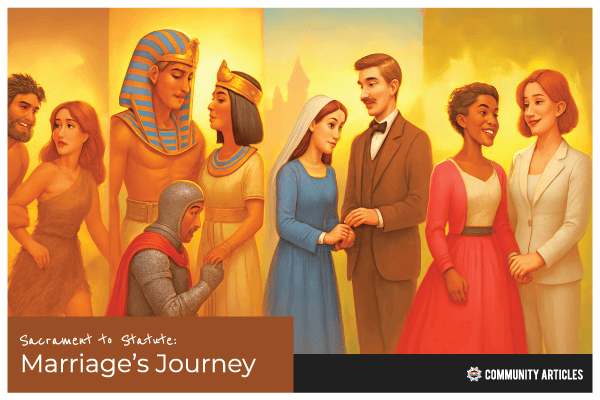
Marriage, for many, is an essential part of the life experience, forming the bedrock of their faith, representing a deep level of commitment, and symbolising their union to the world. Over the centuries, the concept of marriage and unions has shifted from something that was once more a personal commitment to now something performed in a more faith-based setting, with people making a public declaration before friends, family, and God. Traditionally, marriage was only seen as a union between a man and a woman; however, as more countries globally recognise same-sex marriage and many major denominations slowly change their positions, let us explore the history of marriage, what it looks like today, and what it might look like in the future.
From maybe to me: The LGBTQIA+ Journey of Self-Discovery
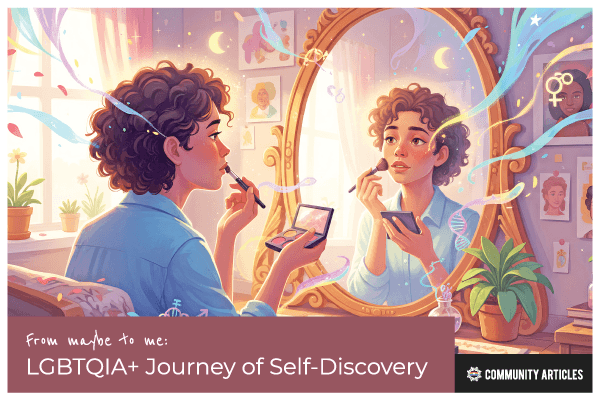
When we feel different, we often search for information, connections and people who might think the same way we do. Societies which suppress expression, as well as persecute people based on their gender or sexual identities, make the journey of self-discovery much longer and more challenging. When it comes to how a person chooses to identity, it is their narrative, their life, and only they can define how they think and feel, who they love and any labels they might want to use. A key stage in the journey of self-discovery, especially in relation to a person’s mental health, is self-acceptance, which is often made much easier in environments that encourage people to be themselves and share their truth. Explore what the journey of self-discovery looks like for many, the challenges many face and the most important factors for anyone coming to terms with who they are.
Progressive Religions: Evolving faiths and their changing Stance on LGBTQIA+
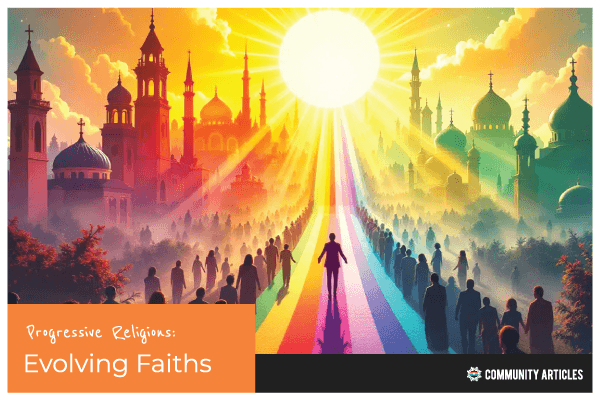
From ancient multi-deity religions to modern progressive faith, not all have viewed and approached the community in the same way. From a time when many of the multi-deity gods would be defined as having LGBTQIA+ attributes using modern standards, to centuries of persecution, the relationship between many of the world’s main denominations and the community is often complicated and fraught with challenges. Given intersectionality and the way many individuals identify as both LGBTQIA+ and believers in the many faiths that exist today, let us explore how regions have evolved and how the positions of these religious institutions are changing in their interactions with and approaches to the community.
The Silent 20: The Unsaid Stuff Secretly Shaping Our Lives
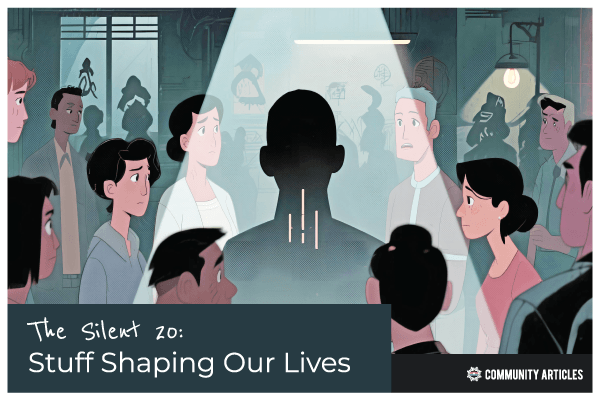
It is often challenging to stay informed, to notice what is going on around us, and to distinguish between what is real and what is fake. We seem to be living in a time and world where it appears extreme events are occurring daily, and where many people are becoming desensitised to tragic events that historically would have elicited a stronger emotional response. As we enter 2026, let us explore the silent 20, twenty factors, cultural phenomena, social movements, and economic mismanagement taking place in many countries that affect everyone but that no one wants to talk about. All the factors shaping our communities and environments and having an adverse impact on our daily lives.
Generation Enlightened: Gen Z Navigating Identity in Turbulent Times
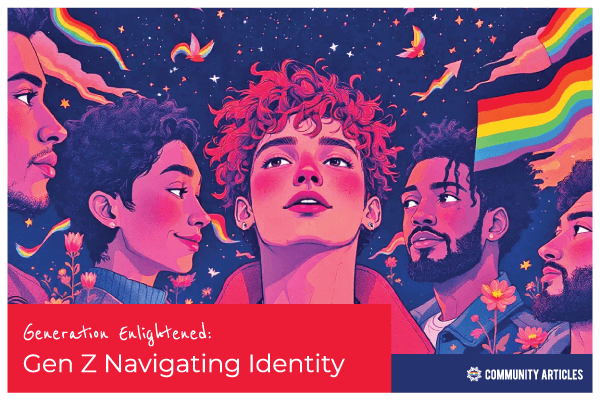
Vocal, opinionated, anxious, lonely, are just some of the words commonly used when describing people from Generation Z; however, though it might be true for some, there is so much more to people born since the turn of the millennium. A generation that has grown up amid some of the worst worldwide events of the past 50 years, yet many of whom still show empathy, care for their community, and a passion for the environment and the political landscape. Let us explore Gen Z, the obstacles and unique characteristics many within this generation have had to face, and the many positive effects they are having on their environments, countries and the world around them.
Vibing with Gen-Z: Your Guide to the new terms
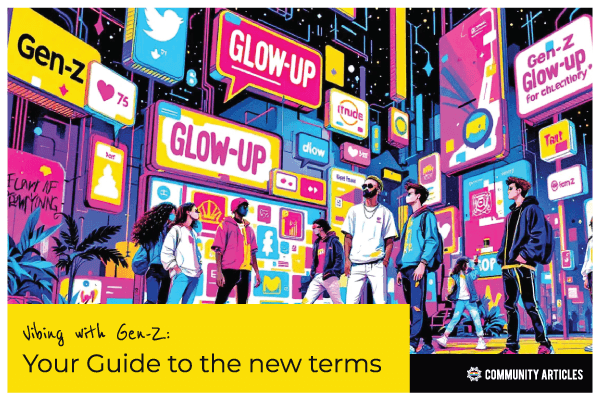
Wow, what Rizz, or you have been ghosted, are Gen Z terms that have been popularised and have now become part of modern language and communication. With each generation comes a unique set of words, phrases, slang, and communication styles that reflect that generation’s cultural experiences, technological influences, and social changes. While these terms are often understood within a specific group, some words and phrases may be unfamiliar or seem outdated to others. Let us explore 12 of the most commonly used Gen Z terms and what they actually mean.
Silenced Colors: LGBTQIA+ Persecution in the Age of Fascism
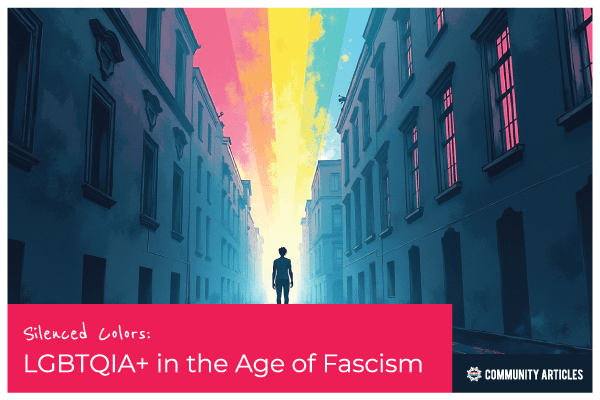
Calling someone a fascist today is often seen as an insult, a powerful word that has a long, difficult association and a troubling history and is based on an ideology that typically appears and has roots within far-right politics and movements. With many more far-right or right-leaning politicians gaining influence and winning political power, we are seeing more rhetoric, characteristics, and behaviours long linked to fascism reappearing. The most common or go-to strategy used by fascists is that of divide and conquer, by creating division amongst societies, highlighting differences and playing on people’s fears, and one that targets and focuses on the most vulnerable and those perceived as different within society, an approach and ideology which historically has targeted specific groups within the LGBTQIA+ community. Explore Fascism and its troubling fascination with LGBTQIA+ individuals, and what the future might hold for the community.
Lost Language of Pride: 12 Terms You May Have Forgotten
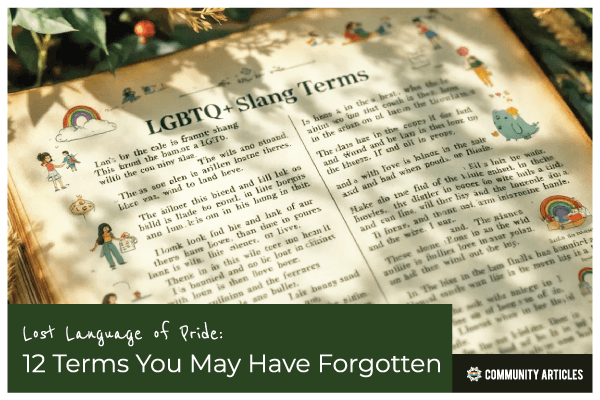
Today, there are many words, terms, and phrases used to describe groups or individuals within the LGBTQIA+ community, both positive and negative, that provide an immediate understanding and serve as a point of reference across communities and societies worldwide. Words that are commonly used today may, like words of the past, be forgotten or come to mean something entirely different to future generations. Discover 12 terms that once held a significant meaning in history, explore what each term meant and the historical context each word held for the community.
Is It Self-Hate or Survival? The Dark Truth Behind the Growing Wave of Gay Conservatives
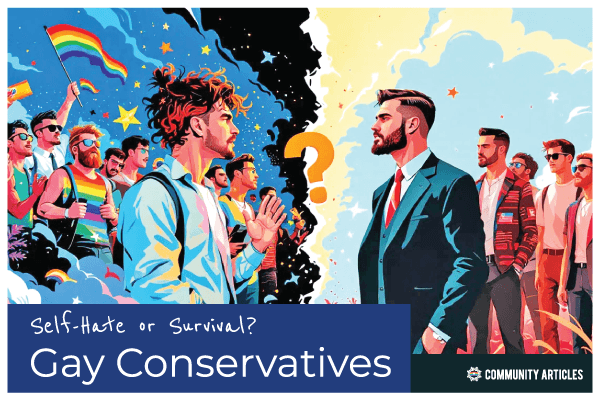
Gay conservatism is a term that is now being used and referenced more often online, in the press and across legacy media. A description used to describe a gay man or woman, who, typically in the US, is someone who likely identifies as a Republican, as well as holding conservative and traditional beliefs. A belief and value system that traditionally was in direct conflict with the LGBTQIA+ community, and one that today is causing division amongst the various groups within the community. Explore what gay conservatism is, what it is not, and the potential risk conservatism may hold for the wider community.