















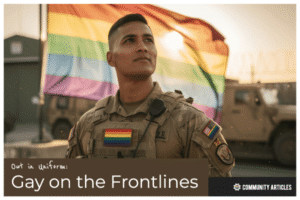
Out in Uniform: Gay on the Frontlines
For thousands of years, LGBTQIA+ people have bravely served in armies, fought in wars, and sacrificed their lives for the people and countries they called home. Yet throughout history, their ability to openly express who they were or whom they loved has varied widely. Today, LGBTQIA+ people can serve openly in many of the world’s armed forces, but acceptance remains far from universal, and the fight for equality continues. From ancient warriors to modern soldiers, let us explore the often-overlooked history of LGBTQIA+ military service, the struggles of those forced to hide, and the evolving fight for acceptance and inclusion, and ask whether someone willing to fight and die for their country should ever have to hide who they are.
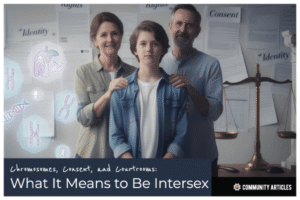
Chromosomes, Consent, and Courtrooms: What It Means to Be Intersex
What happens when nature does not neatly fit into one of two boxes? When people talk about sex and gender, it is often presented as though every person can be neatly classified as either male or female. For most people, that seems obvious. But biology has never been quite that simple. There has long been a group of people: those born with natural variations in chromosomes, hormones, gonads, reproductive organs, or genital anatomy, known as intersex. They are not a product of modern politics, nor are they a new phenomenon. They have existed throughout human history. So why are intersex people so often missing from conversations about sex, gender and identity?
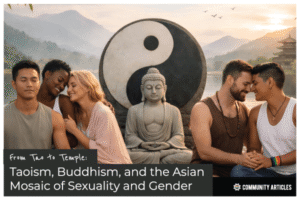
From Tao to Temple: Taoism, Buddhism, and the Asian Mosaic of Sexuality and Gender
What does Buddhism really teach about sexuality? Can Daoist principles offer a distinctive perspective on gender and identity? To what extent is the lived experience of LGBTQIA+ people in Asia shaped by religion, compared with the influence of family, culture, history and law? From Tao to Temple explores these questions across a region that is anything but uniform. From ancient Buddhist and Daoist traditions to modern LGBTQIA+ communities, marriage equality, popular culture and social media, let us look beyond simplistic assumptions about East and West and explore the many pieces that make up Asia’s complex LGBTQIA+ mosaic.