



















DOWNLOADABLE GUIDE AVALIABLE
"Straight people are everywhere!"
DAN SAVAGE
Other associated sexual identifiers:
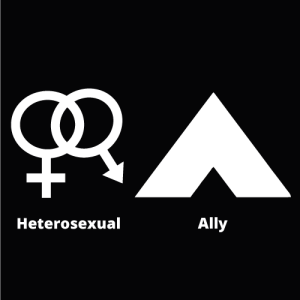
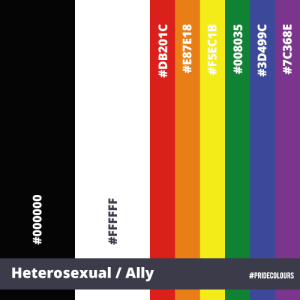
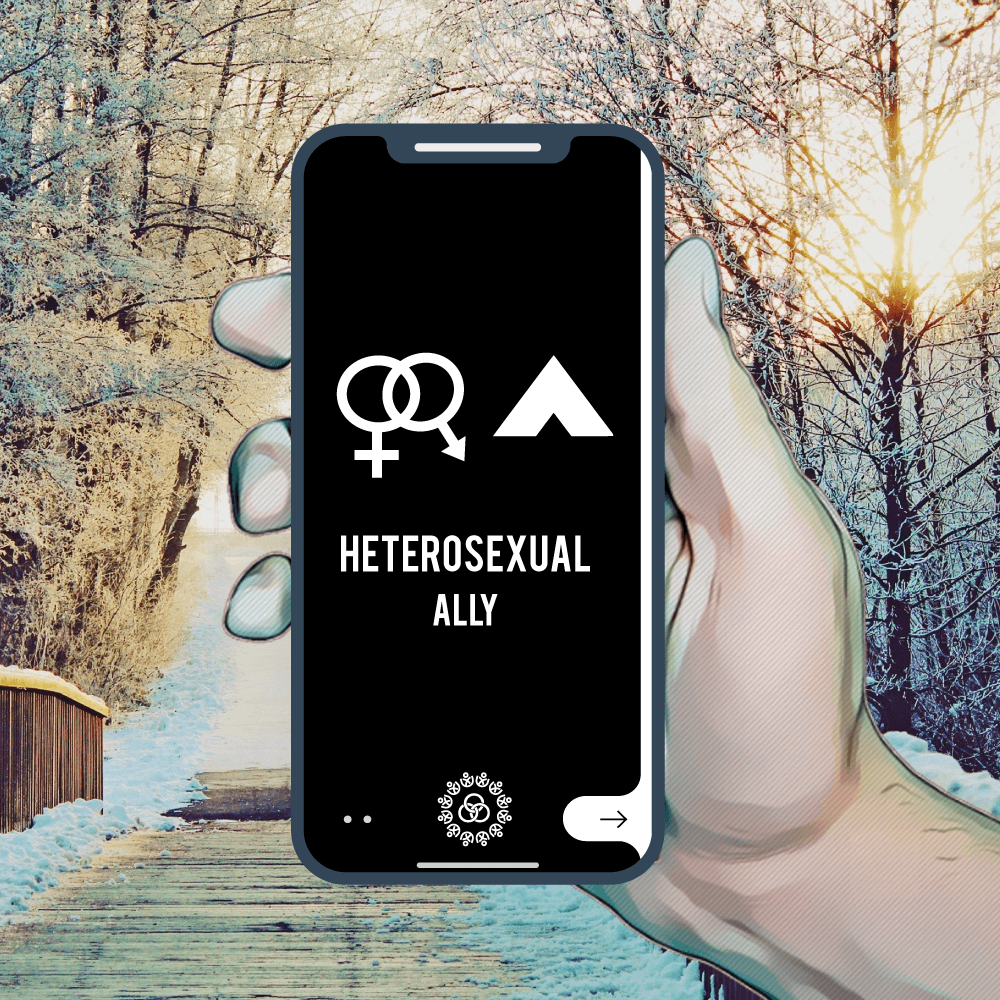
- Ally (pronounced – ei-eye | ˈælaɪ) is not a sexual orientation or identifier, instead is an action or show of support. People that identify as an ally will typically be heterosexual and will show their support through their actions for members of the LGBTQIA+ community

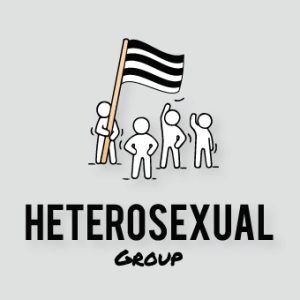
SUMMARY
- Sexual attraction or desire for the opposite gender or sex
- Heterosexual people are also known as straight
- The largest and most accepted sexual orientation or identifier in the world
- Heterosexuals make up the majority of the world’s population, anything from 85%-95% of the world’s population
- Though allies have existed for a long time, it was during the Stonewall Riots in 1969 that many heterosexual allies came out in support of the LGBTQIA+ community
- People are more likely to become an ally when someone close to them identifies as LGBTQIA+. According to sociologist Keith Edwards, there are three stages relating to becoming an ally; the first stage is rooted in self-interest (someone close to them identifying as LGBT), the second stage refers to altruism (helping to combat oppression), and the final stage relates to social justice (respect and the desire to create positive change for the oppressed)
- Straight allies not only help in raising awareness of important issues; however, they have also played a pivotal part in changing public perception and policies on critical LGBTQIA+ related issues
- Parents of LGBTQIA+ children created an organisation known as PFLAG (Parents, Families, and Friends of Lesbians and Gays) which has grown to over 400 chapters across the US
Click on the IOS or Android link to access the app
Click on the name of the resource visit the site

Transition Tapestry: Transgender Journeys and the Shape of Identity
What does it really mean to be transgender? Beyond the headlines, political arguments, and the increasingly divisive debate, there is a more personal story: a person seeking to understand who they are, how they see themselves, and how they want to live their life. The journey may begin with questions in childhood, whilst for others it may not become clear until adolescence or adulthood. It can involve puberty, self-discovery, social transition, healthcare, hormones, and, for some, simply legal recognition. But there is no single path, no universal timeline, and no requirement to follow every step of a perceived process. Let us explore the journey from identity to transition, and the medical, social and legal decisions that may accompany it. Remember that behind the debate is something that can easily be lost in the headlines: a person simply trying to understand themselves and live authentically.

Crossing Lines: LGBTQIA+ Rights When Emigrating
What happens when the rights you rely on every day stop at the border? As more people than ever before choose to live, work, fall in love, marry, and raise families across borders, many assume their legal rights and family status will travel with them. Yet the reality is often far more complex. A marriage recognised in one country may not be recognised in another. A legally recognised parent may lose parental status abroad. Even the legal protections you enjoy today may not exist tomorrow, as laws continue to evolve and can be expanded, restricted, or reinterpreted. Understanding these legal realities is as important as choosing where to live. Whether you are planning a temporary stay, relocating for work, or beginning a new life overseas, explore the legal challenges of crossing borders, gain practical insight into navigating an increasingly complex legal landscape, and discover whether your rights will travel with you.

Across Borders and Bureaucracy: Navigating Worldwide LGBTQIA+ Surrogacy
Surrogacy remains controversial in many countries and cultures, yet it is one of the world’s fastest-growing pathways to parenthood. But how much do you really know about it? Who are a child’s legal parents when they are born through a surrogate? Why is commercial surrogacy permitted in some countries but prohibited or criminalised in others? And why are thousands of intended parents travelling across borders every year to fulfil their dream of building a family? From billion-dollar fertility industries and evolving medical technologies to LGBTQIA+ rights, international legal disputes, and the ethical questions surrounding modern family creation, explore how surrogacy really works, why laws differ so dramatically around the world, and what the future may hold for one of the most rapidly evolving fields in reproductive healthcare and family law.
(literal translations for popular languages)
Click on the button to visit the group website
Click on the button to visit the support resource website