





















2026 LGBTQIA+ Pioneers

Over the centuries, many brave and exceptional individuals, often at significant personal risk, went against the odds and refused to let inequalities and prejudices stop them from changing the rules, laws and opinions relating to the LGBTQIA+ community across the globe.
We all must remember and celebrate all those exceptional individuals. Those people that are now and in the past who have fought hard for equal treatment for the LGBTQIA+ community
Each year we create LGBTQIA+ dollars and feature important and key individuals related to the LGBTQIA+ community. Though some of the individuals featured may not have publicly identified as LGBTQIA+, they are exceptional people who have advanced the community or world in some way.
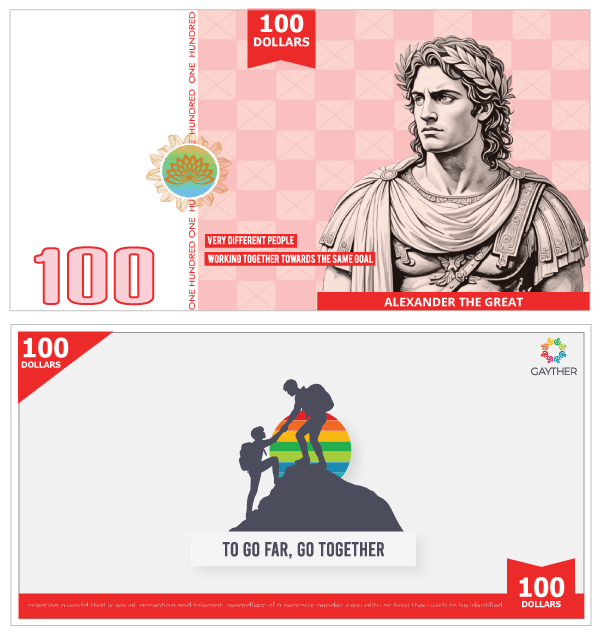
Pella, Macedonia
b. 336 BC – d. 323 BC
Alexander III of Macedon was born in 356 BCE in Pella, the capital of Macedonia. His father was King Philip II of Macedonia, and his mother was his father’s fourth wife, Queen Olympias, daughter of King Neoptolemus I of Epirus. Though his mother was one of eight wives, Queen Olympias was his principal wife for some time, primarily as she bore the King a son. There was much legend surrounding his birth, one that helped his mother secure both her position and popularity by propagating the legend that Alexander had divine parentage and that his actual father was the King of the Greek gods, Zeus.
From a young age, Alexander received an excellent education, studying under the philosopher Aristotle, who taught him philosophy, science, medicine, and literature. In addition to his conventional academic studies, he was also trained in military tactics and leadership, all in preparation for his future role as the nation’s leader. Alexander was always close with his father, and at age 16, he was left in charge as regent and heir apparent of the kingdom while his father waged war against the Thracians to the north.
In his father’s absence, the Thracian tribe of the Maedi revolted, prompting Alexander to quickly and strategically drive them from the territory. Later, the tribe’s territory was colonised, and the city was named Alexandroupolis in honour of Alexander. Military campaigns heavily influenced Alexander’s upbringing, and his life changed in 338 BC when his father married Cleopatra Eurydice, the niece of one of his generals. All of this, combined with his mother losing favour and his position being threatened, led to Alexander and his mother fleeing Macedonia and him seeking refuge in Illyria.
After the assassination of his father, at age 20, Alexander began eliminating all potential rivals to the throne and, after a brutal campaign, ensured his reign. After ascending to the throne, he set out to Asia, conquering the Persian Empire, Egypt, Asia Minor, and parts of India, thereby creating one of the largest empires in the ancient world.
Though Alexander was married multiple times, with his most notable wife being Roxana, a Sogdian princess, he often used marriage as a political means to help secure alliances and legitimise his rule over conquered territories. Many ancient texts and sources from the time suggest that Alexander had close relationships with both women and men. There are also accounts, particularly from ancient historians such as Plutarch and Arrian, that describe Alexander’s close bonds with male companions, notably his relationship with his close friend and general, Hephaestion. Many historians interpret these relationships as evidence of romantic or emotional bonds, indicating that he might likely be considered bisexual in modern standards.
Alexander the Great died at just 32. The exact cause of his death is unknown; however, it took place shortly after he returned home from his campaign in India. Accounts indicate that he was suffering from a fever and other symptoms, with many believing he may have had typhoid or malaria, whereas others believe it was due to poisoning or complications from wounds sustained during battles.
Though he died at such a young age, he, in addition to his military campaigns, founded numerous cities, such as Alexandria in Egypt, which became a centre of learning, culture, and commerce, and inspired future leaders and cultures. His empire influenced subsequent civilisations and inspired military leaders for centuries to come. Though much of Alexander’s life remains controversial, there is no doubt that he had a significant influence on the geopolitical and cultural landscape of modern society. Using his intelligence and strategic mindset, he created one of the largest empires of his time, which helped to integrate many cultures on the continent. Alexander, may you never be forgotten.

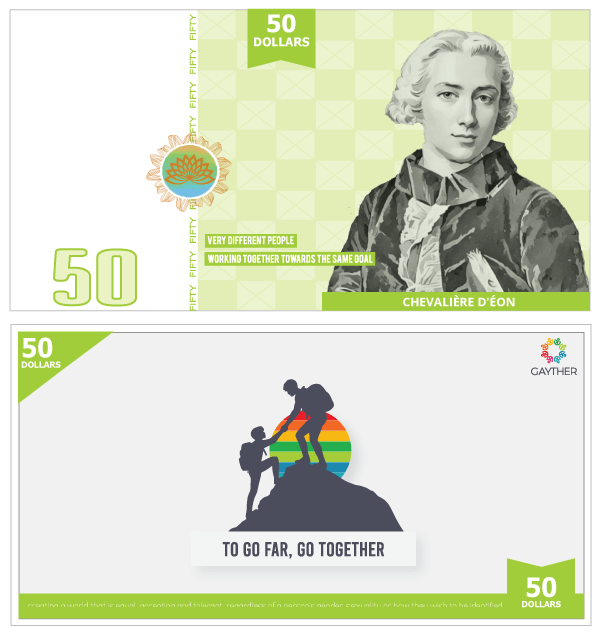
Tonnerre, Yonne, France
b. 1728 – d. 1810
Charles d’Éon de Beaumont was born in Tonnerre, Burgundy, on October 5, 1728. The d’Éon family was a French noble family that, at the time of their birth, had faced hardship. Their father, Louis d’Éon de Beaumont, was an attorney and director of the King’s dominions and their mother, Françoise de Charanton, was the daughter of a Commissioner General to the armies of the wars of Spain and Italy. From a young age, they displayed intelligence and a talent for languages, all of which contributed to their objective of entering the diplomatic service. Charles’ early life was marked by a privileged upbringing that enabled them to pursue education and training in diplomacy, languages, and martial arts.
Charles began their career as a political writer and gained notoriety for their two works on financial and administrative questions, published in 1753. Charles later became secretary to the intendant of Paris, served as a secretary to the administrator of the fiscal department, and was appointed a royal censor for history and literature in 1758. In 1756, a significant opportunity presented itself when Charles joined the Secret du Roi (‘King’s Secret’), a spy network employed by King Louis XV. This organisation was formed and operated without the government’s knowledge.
Charles accompanied the Scottish Baron Kildin, a Jacobite who was also in the King’s secret order to Russia to meet with Empress Elizaveta Petrovna and conspire against the Habsburg Empire. The English were restricting access to the Empress, and Charles claimed to have travelled disguised as the Lady Lia de Beaumont, serving as a maid of honour to the Empress in order to achieve their goal; however, this has been refuted by some historians. Charles went on to become secretary to the Baron Kildin, now the French ambassador to Russia. After returning to France in 1760, Charles became a captain of dragoons and fought in the later stages of the Seven Years’ War. Charles was wounded and, upon returning home, was appointed secretary to the Duke of Nevers and sent to London, where the duke was tasked with drafting the peace treaty that formally ended the war.
The treaty was signed in 1763, and for their contribution to the war and peace process, they were awarded the Order of Saint-Louis, earning them the title of Chevaliere. This title, akin to the formal honorific “Sir” in the UK, is used to address a man whom the monarch has knighted. Chevaliere returned to London and became a diplomat in the French embassy. When the ambassador left, Chevaliere began using their position to spy on the British King, gathering information for a potential French invasion of Britain. When a new ambassador was appointed, Chevaliere was demoted, causing humiliation and leading to a battle between the factions. Chevaliere refused an order to return to France, claiming that their relationship with the new ambassador had worsened, leading the British government to reject an extradition request. The breach of discretion and scandal meant that Chevaliere continued to work as a spy in London and lived in political exile.
Even though Chevaliere wore a uniform, whilst still in London, rumours spread that Chevaliere was actually a woman. After returning home to France after the death of the King, Chevaliere claimed to have been assigned female at birth and demanded government recognition. Chevaliere stated that they were raised as a boy so their father could inherit assets from his in-laws upon their death. The new King, Louis XVI, agreed to the request on the condition that they would continue to present themselves in all public and official matters as male, ensuring the continuity of inheritance rights and social standing within the royal and noble hierarchies, and in doing so would receive a pension from the crown for their years of service.
After the French Revolution, Chevaliere lost their pension, the family’s properties and many of their possessions were confiscated. To earn money, Chevaliere would enter fencing tournaments and, in 1804, was sent to debtors’ prison for five months. Chevaliere died at age 81 and is buried in the churchyard of St Pancras Old Church in London, UK. They are remembered as one of history’s earliest and most notable figures related to gender fluidity and transgender identity, challenging traditional gender roles and perceptions in the 18th century. Their life has inspired discussions on gender identity, expression, and the social constructs surrounding gender. May you never be forgotten.


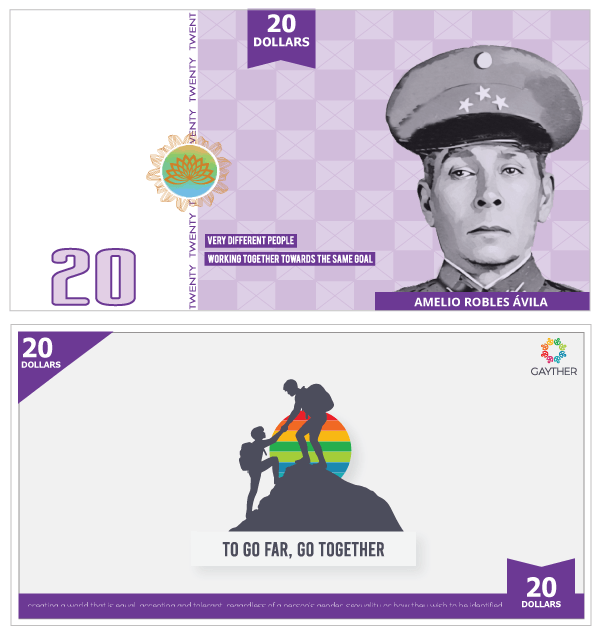
Xochipala, Guerrero, Mexico
b. 1889 – d. 1984
Amelio Robles Ávila was a Mexican revolutionary leader remembered as a hero and a great military leader, as well as a transgender individual. Amelio, having adopted a male identity at age 24, went on to openly live as a man till their death.
Amelia Robles Ávila was born female in Xochipala, Guerrero, Mexico, on November 3, 1889. Amelia’s parents, Casimiro Robles and Josefa Ávila, were wealthy farmers and landowners who also owned a small mezcal distillery, a business that produced a distilled alcoholic beverage made from any type of agave, or maguey. Unfortunately, Amelia lost their father at age 3; a few years later, their mother went on to marry Jesús Martinez, one of the ranch workers on the farm. From a young age, Amelia showed an interest in activities conventionally considered more masculine, such as taming horses and handling weapons, which led them to become an excellent marksman and rider.
After leaving school, Amelia became the treasurer of the Maderistas club, a club for the revolutionary armies, and at age 22, joined the revolutionary army. Initially sent to the Gulf of Mexico in order to canvass funds from oil companies to help with the revolutionary cause. Two years after enlisting in the cause, Amelia, who would now go by the name Amelio, was both demanding and insisting that they be identified and treated as a man. Amelio was not the only transgender male at that time; however, one of the most notable, becoming known as El Coronel Robles during the many battles they fought during the five years of war for independence. Amelio gained much respect from their superiors and proved themselves a capable military leader, resulting in Amelio being given their own command.
Amelio fought in a number of important revolutionary battles and, after the revolution, received the medical certificate required to enter the Confederation of Veterans of the Revolution officially and went on to receive various decorations to acknowledge their distinguished military service, such as being awarded the Mexican Legion of Honour and the Revolutionary Merit award.
Robles’s personal life included a marriage to Ángela Torres and the adoption of a daughter. Despite challenges, including threats over their gender identity, Robles lived authentically as a man, and their identity was accepted by society and the government. Amelio was known for defending himself fiercely if anyone questioned his gender.
Amelio passed away in 1984 at age 95. Today, they are considered an icon of transgender history, with commemorations and memorials reflecting their complex legacy. Their life exemplifies courage, authenticity, and the breaking of gender norms in a turbulent historical context. May you never be forgotten.

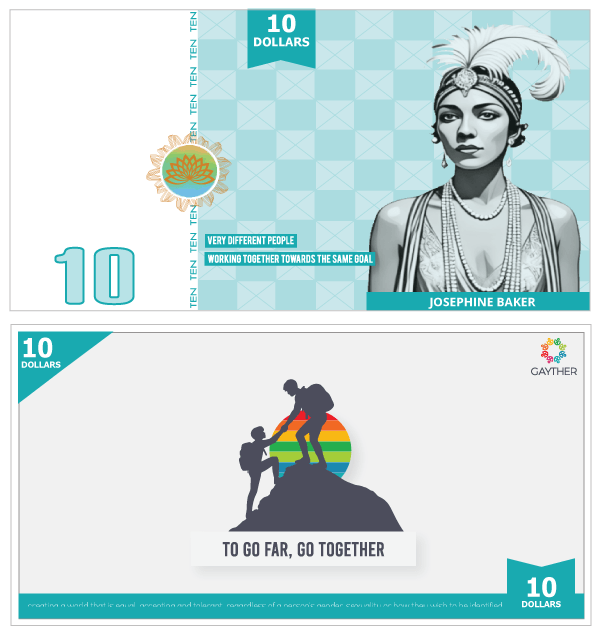
St. Louis, Missouri, United States
b. 1906 – d. 1975
Freda Josephine McDonald was born in St. Louis, Missouri, in the United States on June 3, 1906. Her father was widely unknown until after her death, when her estate identified vaudeville drummer Eddie Carson as her father. Jospehine’s mother, Carrie McDonald, who was a single parent, had herself been adopted by two former enslaved individuals of African descent. Freda grew up in the Chestnut Valley neighbourhood of St. Louis, a racially mixed, low-income area. Growing up in an improvised area, Freda developed street smarts and, from a young age, began working in a laundry house and, at age eight, as a live-in domestic worker for white families in the city. Freda dropped out of school at age 12 and, by age 13, was living on the streets, sleeping in cardboard shelters, scavenging for food, and making a living by dancing on street corners. At age 13, Freda married Willie Wells; however, the marriage lasted only one year. Shortly after the divorce, she joined a street performance group called the Jones Family Band.
Shortly after joining the performance group, Freda decided to move to New York during the Harlem Renaissance and performed at the Plantation Club. Freda secured a job as a chorus line dancer in the successful Broadway show, Shuffle Along. Freda stood out from the rest of the chorus line by often going off script and introducing comedy into her routine. At age 19, Freda moved to Paris and was cast in La Revue nègre at Théâtre des Champs-Élysées, performing Danse Sauvage wearing a feather skirt. Freda, now going by Josephine, became an instant success for her erotic dancing and toured Europe. In a 1926 performance of La Folie du Jour, Josephine wore a banana skirt, a costume and dance for which she became best known.
Josephine quickly became the most successful American entertainer in France, gaining international recognition and adoration from notable figures of the period, such as Ernest Hemingway, who called her the most sensational woman anyone ever saw, and Picasso, who depicted her alluring beauty. In 1937, Josephine married the French industrialist Jean Lion, becoming a French citizen. In September 1939, when France declared war on an advancing German army, Josephine was recruited by the Deuxième Bureau, the French military intelligence agency, as an “honourable correspondent”. Throughout the war, Josephine would visit German and Italian embassies to gather intelligence for the Allied forces, using her charm and presence to avoid arousing suspicion or alarm among those she approached. Josephine was involved in numerous operations, and towards the end of the war, she left France for London.
After the war ended, Josephine was awarded the Resistance Medal, the Croix de Guerre by the French military, and was named a Chevalier of the Légion d’honneur by General Charles de Gaulle. Returning to France, Josephine began performing and quickly became one of Paris’s prominent entertainers once again. Returning to the United States, Josephine supported the American Civil Rights Movement, refused reservations at 36 hotels due to racial discrimination, and even gave a talk at Fisk University, a historically black college in Nashville, Tennessee.
Josephine, a highly successful entertainer, not only used her platform and skills to help the war effort but also the civil rights movement. Josephine is reported as having relationships with both men and women and was openly bisexual, and there is no doubt that she was an impressive individual who rose to fame from humble beginnings. Josephine was remarkable and adopted children throughout her life, referring to them as her Rainbow Tribe, as she wanted to prove that children of different ethnicities and religions could still be brothers. Sadly, Josephine died at age 68, just four days after a star-studded show entitled Joséphine à Bobino 1975″ celebrating her 50 years in show business. Josephine was a much-loved and exceptional individual. May you never be forgotten



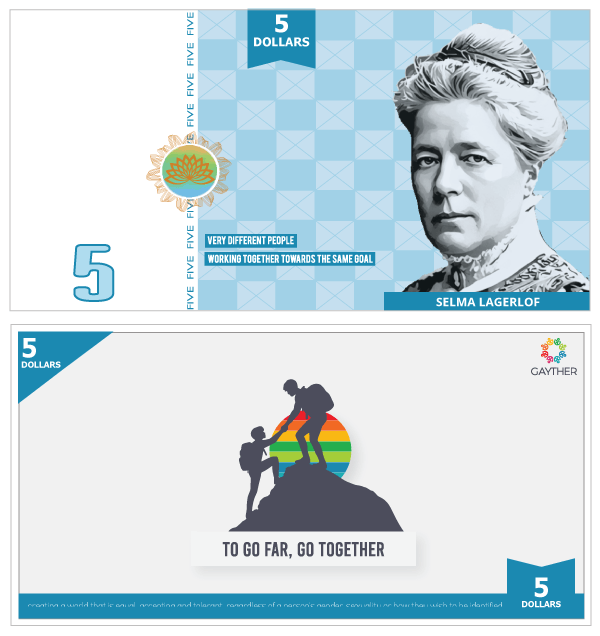
Sunne, Värmland, Sweden
b. 1858 – d. 1940
Selma Ottilia Lovisa Lagerlöf was born in Mårbacka, Sweden, on November 20 1858. The fifth child of Erik Gustaf Lagerlöf, a lieutenant in the Royal Värmland Regiment, and Louise Wallroth, the daughter of a wealthy merchant. Growing up in the Swedish countryside, Selma was a quiet child who loved to read and would listen to stories about folklore, fairy tales, and fantasy, especially those told by her grandmother, who played a role in her upbringing. Educated at home, Selma studied English and French, and by age 8, she knew she wanted to be an author. At age 26, the family’s estate, Mårbacka estate, was sold due to her father’s alcoholism, coupled with, at the time, her father not wanting Selma to continue her education or to get involved in the women’s movement; all of which had a significant impact on the direction of her life.
After graduating from Högre lärarinneseminariet, a royal Seminary and teachers’ college in Stockholm, the first public institution of higher learning open to women in Sweden, Selma taught for over 10 years. During her studies and teaching, Selma began writing, and her first big break came when she won a literary contest in the magazine Idun, in which she submitted the first chapter of her book. This win resulted in a contract to complete the rest of her book. The book received mixed, lukewarm reviews; however, after the popular Danish critic Georg Brandes gave her a positive review, her popularity began to soar. With the financial support of the Swedish philanthropist Fredrika Limnell, Selma was able to focus solely on her literary career.
In 1900, Selma visited the American Colony in Jerusalem and was immediately inspired, writing a book by the same name. The book and her rise in popularity prompted the Royal Family and the Swedish Academy to provide her with substantial financial support to continue writing. The book Jerusalem was an acclaimed success, and Selma became more recognised not only in Sweden but also around the world. Selma went on to write many books, including the popular children’s book The Wonderful Adventures of Nils, which has been translated into more than 30 languages and remains one of her best-known works. Selma became involved in advocacy and joined the growing women’s suffrage movement in Sweden, speaking at various meetings and conferences. Selma, using her influence and connections with the Swedish Royal family, helped secure the release of the mother of her close friend, the German–Swedish poet and playwright, Nelly Sachs, whose elderly mother was Jewish and trapped in Nazi Germany. Through the royal family and Selma’s advocacy, Nelly’s mother was on the last flight from Germany to Sweden and given asylum in Stockholm.
At age 59, Selma was awarded the Nobel Prize in Literature for her writings, with the committee citing her lofty idealism, vivid imagination, and spiritual perception, making her the first woman to win a Nobel Prize in Literature. During her humble acceptance speak, she spoke about visiting her father in heaven and how he wanted her to help with the debts he owed. Using the prize money to buy back the estate the family had lost years before, which also became the place where she lived for the rest of her life. Selma was awarded the litteris et artibus in 1909 and the illis quorum in 1926. In 1991, she became the first woman to appear on a Swedish banknote when the 20-kronor note was released.
Selma was a remarkable individual, even sending her Nobel Prize medal and gold medal from the Swedish Academy to the Finnish government to help them raise the funds they needed to fight the Soviet Union. The Finnish government, touched by the gesture, thanked her and returned the medals, raising the money in another way. In part due to the times, and how it was a taboo, Selma never officially or publicly came out as a Lesbian; however, she lived with Swedish writer Sophie Elkan, her close friend and companion. Selma was also connected with the Swedish teacher, politician and suffragette, Valborg Olander, where, through their surviving correspondence, passages exist that imply both erotic and physical passion.
Selma was a talented author, a humanist, and an exceptional person. In recognition of her contributions, a flight of steps connecting two streets in Jerusalem, Israel, is named after her. Additionally, two hotels in Östra Ämtervik are named after her. Her life is preserved in a museum at her family estate, Mårbacka. May you never be forgotten.


Over the centuries, the treatment of the community and its members’ rights has changed, from individuals being tolerated and often on the fringe of society to becoming active targets and facing brutal persecution. It was only until the end of the 18th Century that things improved. Large scale global change only began to occur in the 20th Century, typically from the 1970s to the present day.
The New York Stonewall Riots in 1969 became a catalyst for the global gay liberation movement. However, many brave individuals have stood up and championed the community throughout history, often at significant risk to themselves. It is often hard to imagine what life must have been like even as recent as 40 years ago, left alone 200 years. With conservative and religious beliefs dominating society, many individuals were required to suppress and hide their true selves for fear of persecution.
It took a group of brave and fearless individuals to stand up and have their voices heard. To show the world that the rules, laws and opinions had to change. The change resulted in the freedoms and rights many of us now enjoy. Increase acceptance and protection within the law directly given the work and effort of these exceptional individuals. Though there have been significant developments relating to the equality status for many members of the LGBTQIA+ community, they are not so fortunate. Many people still live in countries and under regimes; even today, they are actively targeted and in constant fear for their lives. In those countries right now, activists are fighting to change the rights and laws. As individuals and all the risks, and for their bravery and desire to see change, we are truly grateful for all they are going for the global community. We know many of those activists will become pioneers in the future.
Gayther feels it is crucial to highlight and focus on these exceptional pioneers as a community and their contributions to fairer and more tolerant societies worldwide. To showcase all that they have accomplished and to ensure that they are never forgotten, so we would like to take this opportunity to introduce you to Gayther’s annual pioneer collection.
Other collections: ADVOCATES | PIONEER COLLECTIONS: 2026 | 2025 | 2024 | 2023 | 2022 | 2021 | 2020 | 2019












SMARTPHONE SHORTCUTS & BOOKMARKS


