


































Page Headers - Gayther Original (200px)
LGBTQIA+ Families

FERTILITY

A guide to understanding fertility, the human reproductive system, surrogacy, and more

Gayther Family - Fertility
Fertility refers to the ability of an individual or a couple to conceive and reproduce offspring. It encompasses and reflects the health and functionality of reproductive systems and processes.

Contents

| IN PAGE LINKS

ABOUT FERTILITY

Used to describe an individual or a couple's ability to
conceive and reproduce
Learn more about adoption, the typical process and much more.
Gayther Family - About Fertility
Fertility refers to an individual’s or a couple’s ability to conceive and reproduce offspring. It reflects the health and function of the reproductive systems and processes. Several factors influence fertility, including ovulation in females, sperm production in males, hormonal balance, and overall reproductive health. Age, genetics, lifestyle choices, medical conditions, environmental influences, and reproductive history all play a role.

Fertility is significant both socially and nationally; the number of children born in a given period is often referred to as the Fertility Rate, a key metric in demographic research. The term infertility describes those who may be unable to conceive without medical assistance. For such individuals, procedures and technologies like ovulation induction, in vitro fertilisation (IVF), and artificial insemination are available to aid conception.

Fertility is a vital aspect of reproductive rights and health, affecting individual and societal demographics. It also influences family planning, population dynamics, and the worldwide approach to reproductive health challenges.
Typical Process
The typical process regarding fertility involves key stages and factors that influence an individual or couple’s ability to conceive and carry a pregnancy to term. Here is an overview of the general process:
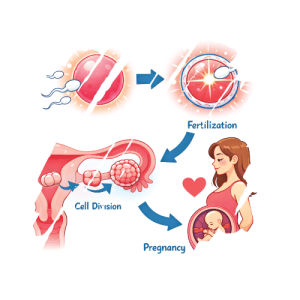
  • Female ovulation – the ovaries within women release mature eggs, known as OVA, during the monthly ovulation period. During this time, hormones such as luteinising hormone (LH) and follicle-stimulating hormone (FSH) regulate this process.
  • Male semen – the testes or testicles produce sperm, which are stored in the epididymis. Male sperm, found in semen, are capable of fertilising an egg.
  • Fertilisation – during sex, male semen is ejaculated into the female vagina, passing through the cervix and uterus into the fallopian tubes, where it meets the OVA and fertilises the embryo.
  • Implantation – once the egg is fertilised, it, known as a zygote, travels down the fallopian tube to the uterus and implants into the lining, signalling the start of pregnancy.
  • Development – the embryo develops into a fetus over about nine months, and during pregnancy, female hormones fluctuate to support the pregnancy and prepare the woman’s body for childbirth.

The process of fertility involves the coordinated functions of reproductive systems to enable conception, from ovulation and sperm production to fertilisation and implantation. Any interruption or dysfunction in these stages can affect the ability to conceive naturally. Fertility factors can be influenced by a person’s age, health, lifestyle, hormonal balance, reproductive organ health, and medical conditions, all of which may impact fertility at each stage. Disruptions or abnormalities in any part of this process can result in infertility.
Learn more
When and where we are born have a significant impact on the quality of our lives, the opportunities we might be given, and the challenges many of us will face. Whether the Silent Generation, who were heavily impacted by events surrounding WWII, or Generation Z, the global pandemic, technology, and even environmental factors mean people of a similar age will have things in common and shared aspects that will likely impact and influence their lives. All people born in a specific period, between certain years, form a generation. The Gayther Generations tool is designed not only to help you quickly determine which generation you belong to, but also to highlight all generations since the beginning of the 1900s, providing interesting facts and the challenges many within those generations have or will likely face. Explore the generations today.
Gayther Adverts - Eldercare (Desktop)
Advertisement | Gayther Elder Community
Gayther Adverts - Eldercare (Mobile)
Advertisement | Gayther Elder Community

BASICS

Exploring the basic
terms relating to fertility
Learn more about many of the terms, processes, and parties involved in fertility, whether it concerns the human reproductive system, birthright citizenship, or legal rights related to fertility
Human Reproductive System
Gayther Family - Human Reproduction
The human reproductive system is a complex network of organs, tissues, and hormones that enable the creation of offspring. It includes structures that produce, store, and facilitate the union of sperm and eggs, as well as support pregnancy and childbirth.
Birthright Citizenship
Gayther Family - Citizenship
Birthright and citizenship are related concepts that concern a person’s legal rights and status based on their place of birth or other criteria. Birthright refers to the legal right to automatically acquire certain rights or privileges by being born in a specific location or under certain conditions. Citizenship is a legal status that grants specific rights, duties, and privileges within a country, such as the right to vote, work, and reside legally. Citizenship can be gained by birth (jus soli), by descent (jus sanguinis), or through naturalisation processes.
Intended Parents
Gayther Family - Intended Parent

Intended parents are individuals or couples recognised as the future legal parents of a child they wish to adopt or have through assisted reproductive technologies. They are the people who plan to raise and care for the child as their own from the beginning.

Parental Rights
Gayther Family - Parental Rights
Parental rights are the legal rights and duties that a parent has regarding their child’s care, upbringing, and decision-making. These rights include the authority to make key decisions about the child’s education, health care, religion, and overall well-being.
Understanding the world around us with
Discover the Gayther Indices, community-related trackers that are among the most comprehensive LGBTQIA+ resources worldwide, covering a wide range of themes from global equality to healthcare systems, to help inform and engage everyone. Whether you are looking for the perfect travel destination or aiming to better understand and support equal rights for community members across the globe, the Gayther Indices are your essential international resource.
Gayther Adverts - LGBTQIA+ Travel (Desktop)
Advertisement | Gayther LGBTQIA+ Travel Guides
Gayther Adverts - LGBTQIA+ Travel (Mobile)
Advertisement | Gayther LGBTQIA+ Travel Guides

ASSISTED

The different methods that
assist with fertility
Assisted Reproductive Technology
Gayther Family - Artificial
Assisted Reproductive Technology, or ART, refers to medical procedures and techniques used to help individuals or couples conceive a child when natural conception is challenging or impossible. ART involves manipulating eggs, sperm, or embryos outside the body to achieve fertilisation and pregnancy.
Donors
Gayther Family - Donor
An egg or sperm donor is someone who provides their eggs or sperm for use in reproductive procedures to assist individuals or couples in conceiving. Donors usually do so through medical and legal agreements, often involving fertility clinics or sperm banks.

Egg Donor – A woman who donates her eggs for use in assisted reproductive procedures such as IVF. Egg donors typically undergo medical screening, hormone treatments, and retrieval procedures.

Sperm Donor – A man who donates sperm for use in artificial insemination or IVF. Sperm donors usually provide samples at fertility clinics or sperm banks after undergoing screening for health and genetic conditions.
Fertility Clinics
Gayther Family - Clinics
Fertility clinics are specialised medical centres that provide diagnosis, treatment, and assisted reproductive services to individuals or couples experiencing fertility issues or seeking reproductive assistance. These clinics offer a variety of services to help people conceive and achieve pregnancy.
In Vitro Fertilisation
Gayther Family - IVF
In Vitro Fertilisation, or IVF, is a reproductive technology in which an egg is fertilised by sperm outside the human body, usually in a laboratory setting. Once fertilisation takes place and embryos develop, one or more are transferred into the woman’s uterus to establish a pregnancy.
Fertility Tourism
Gayther Family - Tourism
Fertility tourism involves individuals or couples travelling to another country to access fertility treatments or reproductive services that might be unavailable, more affordable, or easier to obtain than in their home country. Fertility tourism often includes seeking assisted reproductive technologies such as IVF, egg or sperm donation, or surrogacy abroad.
Gender Selection
Gayther Family - Selection
Often regarded as controversial and a banned practice in many countries, gender or sex selection involves medical or technological methods used to determine the sex of a baby before or at the time of conception or pregnancy. This process enables prospective parents to choose a male or female child based on personal, cultural, or social reasons.
Legal Guardianship
Gayther Family - Guardianship
Legal guardianship is a court-ordered relationship that grants an individual (the guardian) the authority and responsibility to care for and make decisions on behalf of a minor or a person who is unable to manage their own affairs due to incapacity, disability, or other reasons.
Exploring the Worldwide
Learn more about the LGBTQIA+ family index, which compares the rights of community members regarding adoption, surrogacy, and parental rights worldwide. With same-sex marriage and unions now being recognised in over 38 countries and nearly 40 countries offering adoption and parental rights for same-sex couples, the definition of the nuclear family has been changing from being just based on heterosexual relationships, with more LGBTQIA+ individuals opting to adopt or have children of their own, creating a loving and caring family.
Gayther Adverts - Gayther Big Directory (Desktop)
Advertisement | Gayther Inclusive Businesses and Services
Gayther Adverts - Gayther Big Directory (Mobile)
Advertisement | Gayther Inclusive Businesses and Services

SURROGACY

An individual who carries and gives birth
on behalf of the intended parents
Learn more about surrogacy, the process of carrying and giving birth to a child on behalf of intended parents who may be unable to conceive or carry a pregnancy themselves.
Surrogate
Gayther Family - Surrogacy
A surrogate is a person who agrees to carry and give birth to a child on behalf of intended parents who cannot conceive or carry a pregnancy themselves. Surrogacy involves a legal and medical agreement where the surrogate acts as the birth mother for the intended parents’ genetic or donated embryos.
Surrogacy Contract
Gayther Family - Surrogacy Contract
A surrogacy contract is a legally binding agreement between the intended parents and the surrogate mother that details each party’s rights, responsibilities, and obligations throughout the surrogacy process. It specifies aspects such as medical procedures, financial arrangements, legal rights, and parental rights.
Surrogacy Laws
Gayther Family - Surrogacy Laws
Surrogacy laws are the legal rules and guidelines that govern surrogacy within a specific jurisdiction. These laws define the rights, responsibilities, and protections for intended parents, surrogates, and the child born from surrogacy, and they establish whether surrogacy arrangements are legal and enforceable. The laws and regulations differ between countries, and while surrogacy may be legal in one nation, it could be banned in another.
LGBT Surrogacy
Gayther Family - Surrogacy LGBT
LGBT surrogacy involves same-sex and transgender individuals or couples using surrogacy to have children. It includes a surrogate mother carrying a pregnancy for LGBT intended parents who might not be able to conceive naturally or carry a pregnancy themselves. While some countries may permit surrogacy, they might not allow LGBTQIA+ individuals to enter into surrogacy arrangements, and those individuals could be subject to any laws about the LGBTQIA+ community that exist within that country.
Explore the world
Travelling is one of the most popular hobbies and interests around the world. Exploring new places, cultures, and experiences is both exciting and rewarding. For most people, knowing the best time to visit and basic travel details is enough; however, for the LGBTQIA+ community, further research is necessary. The Gayther Travel guides cover hundreds of countries and regions, providing essential travel information, useful terms in local languages, and important health advice, including details on how each country treats members of the LGBTQIA+ community. Discover Gayther guides today.
Quickly find all the information you need when planning a trip. Home to over 600 detailed country and regional guides, including a wide range of general information as well as dedicated LGBTQIA+ specific details
Search over 900 unique weather locations using the fun and interactive weather tool. Discover the best time to travel to a specific area, when is it the hottest, when is the least chance of rain or when it might snow
Planning a trip takes time and effort. Deciding where to go and how to get there can be a challenge. The interactive travel tool is home to thousands of airports, trains, buses and ports worldwide

TYPES OF SURROGACIES

All of the different types of
surrogacy arrangements
Altruistic
Gayther Family - Altruistic
Altruistic surrogacy is a type of surrogacy where the surrogate mother agrees to carry and give birth to a child for intended parents without receiving any financial compensation beyond reasonable expenses related to pregnancy and childbirth. It is motivated by altruism and the wish to help others become parents.
Commercial
Gayther Family - Commercial
Commercial surrogacy involves the surrogate mother receiving payment or financial compensation beyond reimbursement for medical and pregnancy-related expenses. This arrangement is based on a contractual agreement where the surrogate is paid for her services in carrying and delivering the child. Important: Commercial surrogacy, or where a person is paid to act as a surrogate, is illegal in many countries around the world.
Cross-Border Surrogacy
Gayther Family - Cross Border Surrogacy
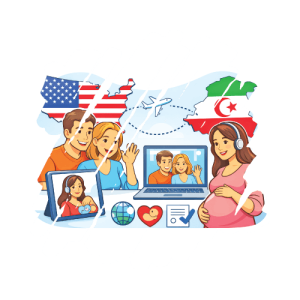
Cross-border surrogacy involves individuals or couples pursuing surrogacy arrangements in a country different from their own, often due to legal, regulatory, or cost-related factors. It includes travelling internationally to access surrogacy services that may be unavailable, restricted, or more affordable in their home country. The term is synonymous with international surrogacy.
Gestational Surrogacy
Gayther Family - Gestational
Gestational surrogacy is a form of surrogacy where the surrogate mother carries an embryo created through in vitro fertilisation (IVF) using the intended parents’ or donors’ eggs and sperm. In this setup, the surrogate has no genetic connection to the child, as she does not use her own eggs.
International Surrogacy
Gayther Family - International Surrogacy
International surrogacy involves a surrogacy agreement where the intended parents and the surrogate mother are based in different countries. This practice frequently requires travelling across borders to access surrogacy services that are unavailable, restricted, or more affordable in their home country. The term is synonymous with cross-border surrogacy.
Surrogacy Agency
Gayther Family - Surrogacy Agency
A surrogacy agency is a professional organisation or company that organises and oversees surrogacy arrangements between intended parents and surrogate mothers. The agency offers support, guidance, and coordination throughout the whole surrogacy process, including legal, medical, and emotional aspects. Important: Commercial surrogacy, or where a person is paid to act as a surrogate, is illegal in many countries around the world.
Traditional Surrogacy
Gayther Family - Traditional Surrogacy
Traditional surrogacy involves a surrogate mother using her own egg, which means she is genetically related to the child she carries. In this setup, her egg is fertilised with the intended father’s sperm (or donor sperm), making her the child’s biological mother.
Worldwide recognition of
Marriage equality differs across the globe, and the legal landscape, both positive and negative, continues to change. The Gayther index highlights every country where same-sex marriage or civil unions are legally recognised, offering LGBTQIA+ individuals, couples, and allies clear information about their rights. Whether you’re planning to move, travel, or simply want to understand the global picture, see where progress has been made and where challenges remain.

SURROGACY PROCESS

The typical steps and
process relating to surrogacy
Gayther Family - Surrogacy Process
The process described does not intend to promote, advertise, or endorse surrogacy. This section does not offer advice, as it does not account for your personal circumstances or the laws and regulations in your country.

Eligibility, selection, and the steps involved in surrogacy differ between countries, with some nations banning it entirely, while others permit altruistic or overseas surrogacy agreements. Here are some of the common and key steps that usually apply.
  • 1 | Understanding your country’s position on surrogacy – whether surrogacy is legal, the types of arrangements, and all available services
  • 2 | Establish your country’s citizenship requirements – countries, although often similar, do not always follow the same rules and approaches. If you choose an international route, there is a possibility that your child will be born stateless, so it is important that, whichever route you take, you understand the process for obtaining full citizenship for your child once they are born, especially if you have surrogacy arrangements overseas.
  • 3 | Selecting a route – whether gestational, via a surrogate, using donor eggs, traditional, through a surrogate with a biological connection, using the surrogate’s own eggs, or through a surrogacy agency, especially if overseas. It is important to note that some countries have banned commercial surrogacy advertising, so research may be necessary to find and choose a suitable route.
  • 4 | Matching and Selecting – often, after selecting the most suitable route, the next step is usually medical screening. Here, a medical professional assesses the viability of eggs and sperm and conducts psychological screening to ensure that all parties fully understand the implications and commitments. Typically, at this stage, you will find a suitable surrogacy match, or an agency will assist you in finding one.
  • 5 | Legal Agreements – before any medical treatments or pregnancy, legal agreements are usually prepared regarding individual responsibilities, costs or expenses, contingencies, and ultimately the transfer of rights of the newborn child upon birth.

At this stage in the process, the surrogacy arrangement will come into effect.
Things to Consider
  • Your county’s legal stance on surrogacy. Although this stance may change over time, the Gayther LGBTQIA+ family index provides a country-by-country breakdown of laws and restrictions that may be in place.
  • The rules regarding citizenship for your future child, whether by birth, through one or both parents, or by application.
  • Costs and expenses – in many European countries, only altruistic surrogacy is permitted, and some countries may allow reasonable expenses. For agency or international surrogacy, the costs will vary, but are likely in the tens of thousands of US dollars.
  • If you are going overseas for surrogacy, you should plan for travel expenses both during and after the pregnancy. For instance, you might need to be present during the birth, which could mean spending two or more weeks in the surrogate’s country, considering visa requirements and restrictions.
  • If a country allows commercial surrogacy, it does not necessarily mean that LGBTQIA+ individuals and couples are eligible. It is crucial to establish and verify this early when choosing a country, agency, or surrogate.
  • Contingency planning involves understanding what occurs if things do not go as expected, such as a change in laws during pregnancy, birth complications, or if the surrogate changes her mind. It is crucial to grasp the legal options and protections fully and to prepare for all potential risks. Additionally, if you are married or in a relationship, consider the possibility that it might break down, and discuss how you would manage the child’s well-being and co-parenting, including any financial responsibilities.
  • Emotional impact – whether you are ready and prepared for the emotional impact of the process, the pregnancy, as well as the future.
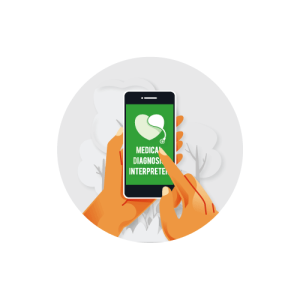
When travelling, as a non-native speaker of a language or when you cannot speak, communicating how you think and feel to a medical practitioner can be challenging. The medical diagnosis interpreter, also known as the MDI, is a free click-and-point solution where you can use literal translations for up to 89 different languages
Knowing the local emergency telephone numbers is crucial, whether at home or abroad. The Gayther guide not only provides the various telephone numbers for the emergency services worldwide but also common phrases in the native language
When escaping persecution or conflict, travelling through a country as a non-native speaker of a language or when you cannot speak is difficult. Quickly communicating your needs and any required assistance is challenging and often time-critical. The refugee communication tool is an essential tool designed to help anyone in a problematic situation share their circumstances with those in a position to help
Helping you get the support you need
When disaster hits, it is crucial to get the right information quickly. From the correct emergency telephone number wherever you are in the world to how we communicate with a medical professional during an emergency, Gayther offers a range of useful tools, such as the emergency telephone number tool and the medical diagnosis tool. Discover the Emergency Services tools today.
Connect with the community
Gayther Affinity is a private platform for the global LGBTQIA+ community. A space that gives you the freedom to be yourself. Helping you communicate with and connect to people similar to yourself. People from around the world from all age groups and backgrounds. Signup for your free Affinity account today
Gayther
your community resources
A community platform that features a variety of tools, services, guides, and much more. Free tools and services tailored toward the global LGBTQIA+ community

Search

| GAYTHER DIRECTORIES

The big directory comprises fourteen groups and over one thousand categories, from travel accommodation to home maintenance
There are thousands of events taking place, it is not always easy to know what is going on and when, Gayther can help
The Care Providers and Services directory lists businesses and services that are inclusive and welcoming to all
There are millions of non-profit organisations, advice services, and support groups worldwide, all designed to help you
The RM Directory is designed to showcase organisations and services experienced in assisting those seeking refuge or relocating. Whether a refugee who is forced to leave home due to war or a migrant seeking out better living conditions, the RM Directory can help
Resources designed to help you engage
With more than a thousand data points on weather stations around the world, hundreds of LGBTQIA+ country and state travel guides, and articles, fun activities, and games related to the community, there is something for everyone on Gayther. Support your friends, followers, or customers by including a badge or one of the many colourful QR codes in your newsletter, blog, vlog, or website to direct them to resources that connect directly to you, your business, or your service. Discover QR codes and gayther badges today.

DISCOVER MORE

When we explore, we learn; the more we know, the greater our
understanding of the world
Gayther is a positive platform for everyone. One that empowers people to understand more about the LGBTQIA+ community by dispelling misinformation, to showcase all aspects of the exceptional and diverse global community and all that it contributes to the world
Learn more about Gayther; it’s history, values and mission
Discover Gayther Care, a site dedicated to community support and care
Discover all about the LGBTQIA+ community from the many resources available
Planning a trip? Gayther provides extensive country guides for every country across the globe
Find the information you need quickly with the wide range of guides available on Gayther
Be inspired and have some fun, with a wide range of articles, personality tests, quizzes and crosswords on offer

Never miss a story, offer or event again. By subscribing to Gayther, you will receive the latest news, articles, upcoming events, and so much more straight to your mailbox

Discover more about sexuality, from the various identities to inspiring content and information
Discover more about the unique and diverse gender identities within the LGBTQIA+ community
Discover more about the special groups and the people and organisations supporting and helping the LGBTQIA+ community
Not sure what you are looking for? There are many ways to find what you need quickly; the search section provides links to the many search services
Impress your friends with key facts and keep updated on the latest developments and trends within the community
Discover Gayther Trinary, three unique services focused on the different aspects and requirements of the LGBTQIA+ community
IMPORTANT DISCLAIMER: The information displayed on this page is for illustrative purposes only and does not constitute advice. It is essential that, before travelling, you independently gather information specific to your requirements and circumstances. Though we endeavour to keep all information across the site up to date, we do not guarantee the accuracy or completeness of any information displayed. The languages and terms featured on this page are literal translations and have not been validated or verified. The service is provided free of charge, and by using it, you accept that you are doing so at your own risk. This page may contain external links to third-party websites; Gayther provides these links for your convenience and does not endorse, warrant or recommend any particular products or services. By clicking on any external links, you will leave Gayther and be taken to the third-party website, which you do so at your own risk and by accessing the site, you will be required to comply with the external third party’s terms and conditions of use and privacy policies