
























Showcase your business to the global LGBTQIA+ community with a stylish and engaging listing on one or more applicable directories on Gayther. From free to enhanced plans and six specialist directories, there is something to suit any business, service or event. Discover how to promote your business today.
The largest of all the Gayther directories and is comprised of fourteen groups and over one thousand categories, from travel accommodation to home maintenance
The CPS directory is designed to highlight all businesses and services that offer inclusive, gay-friendly or tailored LGBTQIA+ eldercare solutions
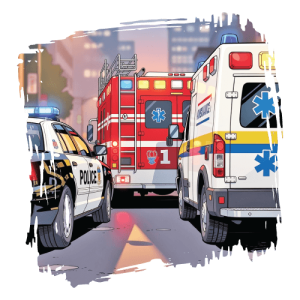
List any event taking place worldwide, from concerts to gatherings that are inclusive and specific to the LGBTQIA+ community or those that welcome everyone
Iamlet is a unique service that showcases properties around the world. Helping customers and potential buyers find their perfect accommodation quickly
The two-for-one, also known as the two-together plan, is a unique opportunity to purchase two listings for little more than a single enhanced listing
Discover more specialist directories and other ways to promote on Gayther, from the community network to bulk discount requests
Keep up with the latest news and developments
Even in your darkest hours, whatever you might face, it is always important to reach out, as there are people who care and are equipped to help you wherever you are. At Gayther, we have developed many free services and tools to support you at home or overseas to help you quickly get the help you need. Please consider speaking to someone before you do something that cannot be undone or has a lasting impact on the quality of your life.
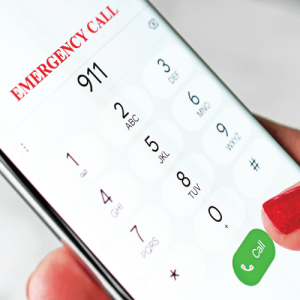
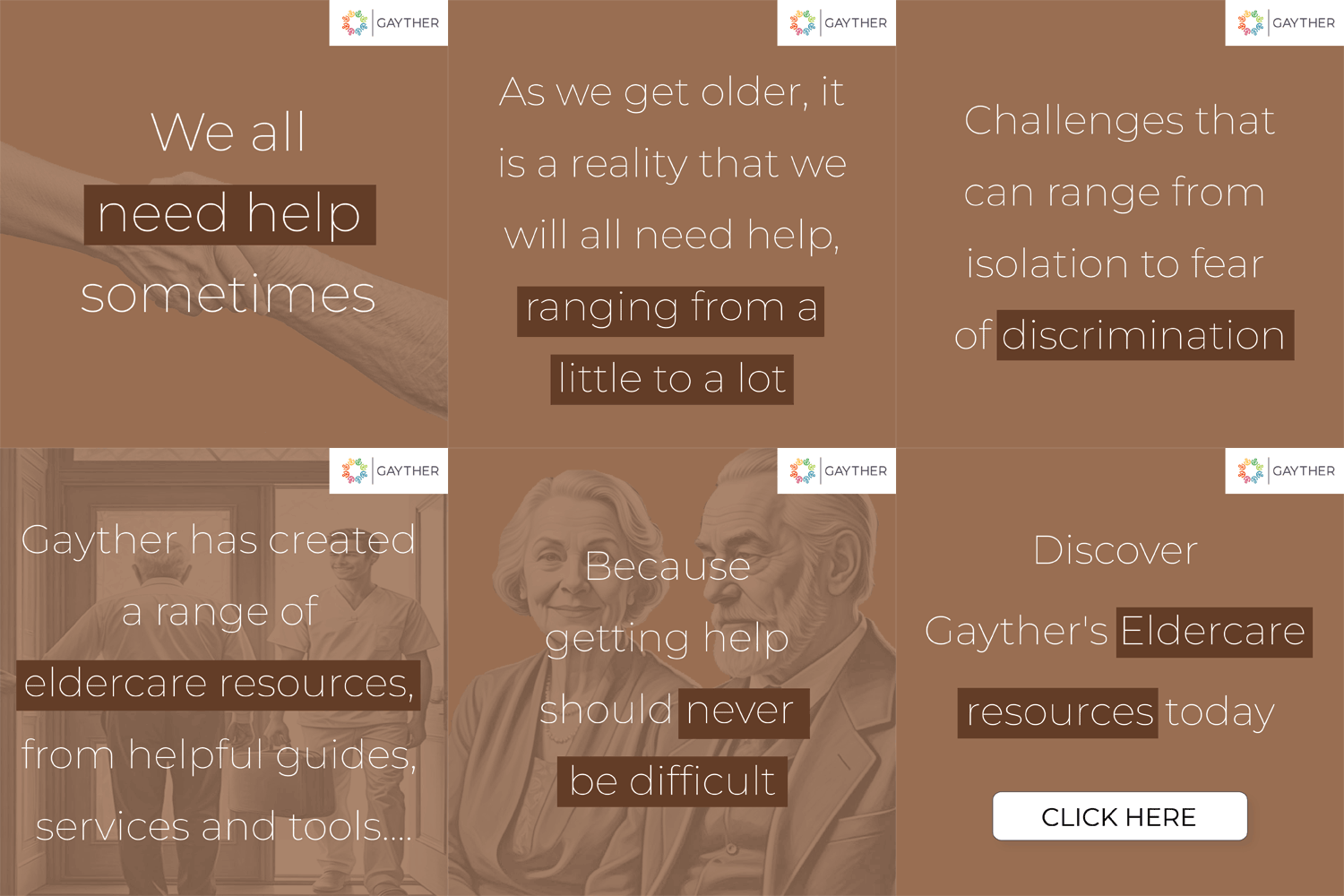
Discover the local telephone numbers and terms for emergency services for every country around the world. Helping you get the help you need fast.

The MDI is a free online tool with downloadable guides designed to help you quickly communicate how you are feeling and any conditions, pains and symptoms to a medical professional in over 80 languages.

The Support Groups and NPOs directory is interactive and designed to quickly help you find support groups or charities nearby. We all need help sometimes, and you can find organisations providing assistance ranging from addiction support to suicide prevention.

The RCT is a free online tool which helps someone seeking refuge communicate with border control and immigration officials. A locate and point solution that structures the conversation in over 80 languages and helps convey a person's situation and needs quickly.

A simple tool designed to help communicate the name of a country. The tool not only features local names but also provides links to the various resources available across Gayther associated with that given country.

As part of the Refugee and Migrant country guides, you will discover the Safe Country Index, which scores each country based on various key factors. In addition, whatever country you are in, you can quickly find the distance to all of the safe countries closest to you.

Gayther has an extensive range of free tools and services to help those seeking refuge worldwide. From a dedicated directory providing interactive search facilities for organisations and services to information for LGBTQIA+ asylum seekers.

Gayther offers free and interactive tools for people of all ages and situations. Visit Gayther Care to discover them all for yourself today.
Showcase your business to the global LGBTQIA+ community with a stylish and engaging listing on one or more applicable directories on Gayther. From free to enhanced plans and six specialist directories, there is something to suit any business, service or event. Discover how to promote your business today.
The largest of all the Gayther directories and is comprised of fourteen groups and over one thousand categories, from travel accommodation to home maintenance
The CPS directory is designed to highlight all businesses and services that offer inclusive, gay-friendly or tailored LGBTQIA+ eldercare solutions
List any event taking place worldwide, from concerts to gatherings that are inclusive and specific to the LGBTQIA+ community or those that welcome everyone
Iamlet is a unique service that showcases properties around the world. Helping customers and potential buyers find their perfect accommodation quickly
The two-for-one, also known as the two-together plan, is a unique opportunity to purchase two listings for little more than a single enhanced listing
Discover more specialist directories and other ways to promote on Gayther, from the community network to bulk discount requests
The Gayther Streaming service offers a vast collection of informative and entertaining audio and video recordings, directly or indirectly related to the LGBTQIA+ community, as well as hours of podcasts and recordings to help keep you entertained. Explore the streaming service yourself today.

Explore all audio and video content available across the Gayther platform, and filter by category, platform, or language.

Explore all of the video content available on the Gayther platform, from video podcasts to information highlights.
Explore all the audio content available on the Gayther platform, from podcasts to highlights.
Learn more about all of the channels produced or sponsored by Gayther. Podcasts such as Uncaged Nation and Gayther Audio

Discover all of the platforms where you can find Gayther audio or video content. From services such as Substack to YouTube
Watch any of the available video shorts, short-form videos that highlight podcast material or informative episodes
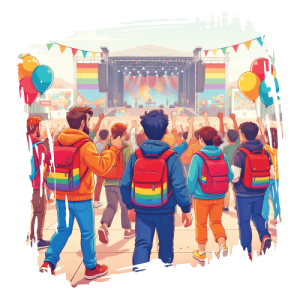
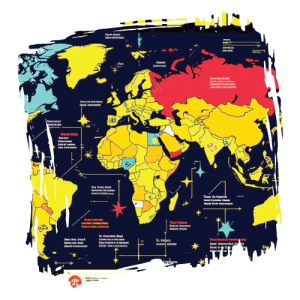
Learn each year how individual countries and regions around the world are treating members of the LGBTQIA+ community. From the status and laws of same-sex marriages to gender identity recognition, this easy-to-use equality index provides a score and breakdown for every country worldwide
The gay, lesbian, bisexual, transgender, Intersex, Ally and all groups with non-traditional gender and sexual identities, collectively known as the LGBTQIA+ community, have been around in many forms for thousands of years and throughout the centuries. The community faced hundreds of years of persecution, targeted campaigns and gruesome convictions when prosecuted. It was not until the late 18th century that the gay movement began to gain momentum, with prominent people advocating for equality and a movement that continues today. From emperors to actors, the community has a long and rich history. Often a tale of people facing adversity, just for accepting who they are, even when the risk to their personal safety is so high. Many within the community face a challenge every day, in every country, region, and continent worldwide.
The LGBTQIA+ equality index focuses on the community’s global status, rights, and legal treatment. The index is compiled by reviewing the many rules and laws that directly affect and impact the community, including same-sex legal status, the right to marry, anti-discrimination laws and other key metrics. To understand all of the areas and how they contribute to the overall score, click here to view the how it was calculated page
Through the work of advocates and pioneers, many members of the LGTBQIA+ community now have the rights and freedoms to live their authentic lives or selves without fear of persecution; however, there are still inequalities and injustices occurring all over the world. Many brave individuals and groups work within those countries to change the laws and opinions, so hopefully, everyone will have the freedom and protection under the law one day.
Simply put, the higher a country scores, the lower the equality status of that country on the index. The lower the status, the worse they treat members of the LGBTQIA+ community.
IMPORTANT: If you feel your life is in danger or fear persecution, visit the non-profit organisations and support groups’ pages. There are many specialist charities and groups available worldwide that can help. A link to support groups can be found in the footer of every page on the Gayther service

Home | GAYTHER LGBT
We firmly believe that the internet should be available and accessible to anyone, and are committed to providing a website that is accessible to the widest possible audience, regardless of circumstance and ability.
To fulfill this, we aim to adhere as strictly as possible to the World Wide Web Consortium’s (W3C) Web Content Accessibility Guidelines 2.1 (WCAG 2.1) at the AA level. These guidelines explain how to make web content accessible to people with a wide array of disabilities. Complying with those guidelines helps us ensure that the website is accessible to all people: blind people, people with motor impairments, visual impairment, cognitive disabilities, and more.
This website utilizes various technologies that are meant to make it as accessible as possible at all times. We utilize an accessibility interface that allows persons with specific disabilities to adjust the website’s UI (user interface) and design it to their personal needs.
Additionally, the website utilizes an AI-based application that runs in the background and optimizes its accessibility level constantly. This application remediates the website’s HTML, adapts Its functionality and behavior for screen-readers used by the blind users, and for keyboard functions used by individuals with motor impairments.
If you’ve found a malfunction or have ideas for improvement, we’ll be happy to hear from you. You can reach out to the website’s operators by using the following email info@gayther.com
Our website implements the ARIA attributes (Accessible Rich Internet Applications) technique, alongside various different behavioral changes, to ensure blind users visiting with screen-readers are able to read, comprehend, and enjoy the website’s functions. As soon as a user with a screen-reader enters your site, they immediately receive a prompt to enter the Screen-Reader Profile so they can browse and operate your site effectively. Here’s how our website covers some of the most important screen-reader requirements, alongside console screenshots of code examples:
Screen-reader optimization: we run a background process that learns the website’s components from top to bottom, to ensure ongoing compliance even when updating the website. In this process, we provide screen-readers with meaningful data using the ARIA set of attributes. For example, we provide accurate form labels; descriptions for actionable icons (social media icons, search icons, cart icons, etc.); validation guidance for form inputs; element roles such as buttons, menus, modal dialogues (popups), and others. Additionally, the background process scans all the website’s images and provides an accurate and meaningful image-object-recognition-based description as an ALT (alternate text) tag for images that are not described. It will also extract texts that are embedded within the image, using an OCR (optical character recognition) technology. To turn on screen-reader adjustments at any time, users need only to press the Alt+1 keyboard combination. Screen-reader users also get automatic announcements to turn the Screen-reader mode on as soon as they enter the website.
These adjustments are compatible with all popular screen readers, including JAWS and NVDA.
Keyboard navigation optimization: The background process also adjusts the website’s HTML, and adds various behaviors using JavaScript code to make the website operable by the keyboard. This includes the ability to navigate the website using the Tab and Shift+Tab keys, operate dropdowns with the arrow keys, close them with Esc, trigger buttons and links using the Enter key, navigate between radio and checkbox elements using the arrow keys, and fill them in with the Spacebar or Enter key.Additionally, keyboard users will find quick-navigation and content-skip menus, available at any time by clicking Alt+1, or as the first elements of the site while navigating with the keyboard. The background process also handles triggered popups by moving the keyboard focus towards them as soon as they appear, and not allow the focus drift outside it.
Users can also use shortcuts such as “M” (menus), “H” (headings), “F” (forms), “B” (buttons), and “G” (graphics) to jump to specific elements.
We aim to support the widest array of browsers and assistive technologies as possible, so our users can choose the best fitting tools for them, with as few limitations as possible. Therefore, we have worked very hard to be able to support all major systems that comprise over 95% of the user market share including Google Chrome, Mozilla Firefox, Apple Safari, Opera and Microsoft Edge, JAWS and NVDA (screen readers).
Despite our very best efforts to allow anybody to adjust the website to their needs. There may still be pages or sections that are not fully accessible, are in the process of becoming accessible, or are lacking an adequate technological solution to make them accessible. Still, we are continually improving our accessibility, adding, updating and improving its options and features, and developing and adopting new technologies. All this is meant to reach the optimal level of accessibility, following technological advancements. For any assistance, please reach out to info@gayther.com